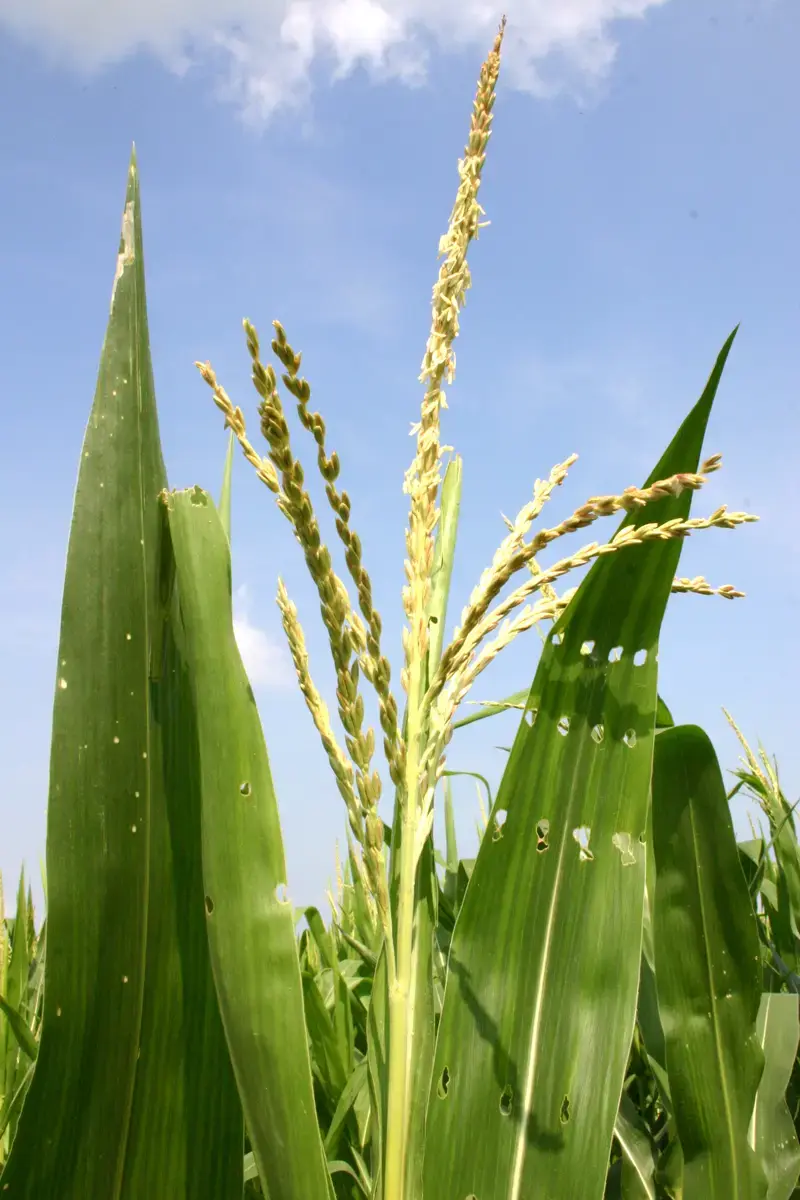
Maize (Zea mays)
Photo: Spedona, CC BY-SA 3.0, Wikimedia Commons

On the map in 9 countries crop symbol: Angola

Maize

Zea mays

Family: Poaceae

On our map this plant appears in 9 countries and ranks highest in: Guatemala, United States, Venezuela, Zambia, Zimbabwe, Kenya and others.

An annual cultivated grass with tall, unbranched stems, male tassels at the top and cobs in the leaf axils. Domesticated in Mesoamerica several thousand years ago, it became the foundation of all the civilisations of the region. Many local varieties with white, yellow, red and almost black kernels have survived in the Guatemalan highlands. It is traditionally grown in the milpa system – together with beans and squash, which support one another.

Description from: Guatemala.

More: Wikipedia (en) Wikipedia (pl) Plants of the World Online (Kew)

Significance in each country

  1. Guatemala no. 4 of 8 native

    Maize is the foundation of Maya culture and of Guatemalans’ daily diet – as tortillas, tamales and atole drinks. The novel “Men of Maize” by Nobel laureate Miguel Ángel Asturias draws on this very myth from the Popol Vuh.

  2. United States no. 5 of 15 cultivated

    The United States harvests about a third of the world’s maize crop, and much of it goes into bioethanol and animal feed. Maize runs through American food and culture – from popcorn and cornbread to fairs with corn mazes in the fields.

  3. Venezuela no. 6 of 10 cultivated

    The arepa made from maize flour is a symbol of Venezuelan cooking; since 1960 it has been made mainly with precooked Harina P.A.N. flour, which replaced the laborious hand-grinding of the grain.

  4. Zambia no. 6 of 8 cultivated

    Maize is Zambia’s staple crop, and its prices and harvests are a political issue – the state Food Reserve Agency buys up grain and keeps stocks in case of drought.

  5. Zimbabwe no. 6 of 8 cultivated

    Maize is Zimbabwe’s most important crop, and sadza – a thick porridge of maize meal (upfu) – is served with most meals alongside vegetables, meat or beans.

  6. Kenya no. 7 of 10 cultivated

    Maize is Kenya’s most important crop and is grown by most rural families; ugali is eaten with sukuma wiki greens, beans or meat, and a boiled mixture of maize and beans is the popular githeri.

  7. Romania no. 7 of 10 introduced or naturalised

    Maize reached the Romanian lands in the 17th–18th centuries and replaced millet as the basis of mămăligă, served with brânză cheese, sour cream and sarmale. Romania is now one of the largest maize producers in the European Union.

  8. Angola no. 8 of 10 introduced or naturalised

    Maize leaves on the national emblem of Angola

    On the central plateau and in the south of the country maize replaces cassava as the staple food – its flour is used to make funje de milho and pirão.

  9. Peru no. 11 of 15 cultivated

    Maize, together with the potato, was the basis of the Inca economy, and chicha de jora made from sprouted grain still accompanies Andean festivals today.