Venezuela · #6 crop
Maize
Zea mays · locally: maíz
Maize is made into the arepa – a round flatbread that Venezuelans eat for breakfast, lunch and dinner.
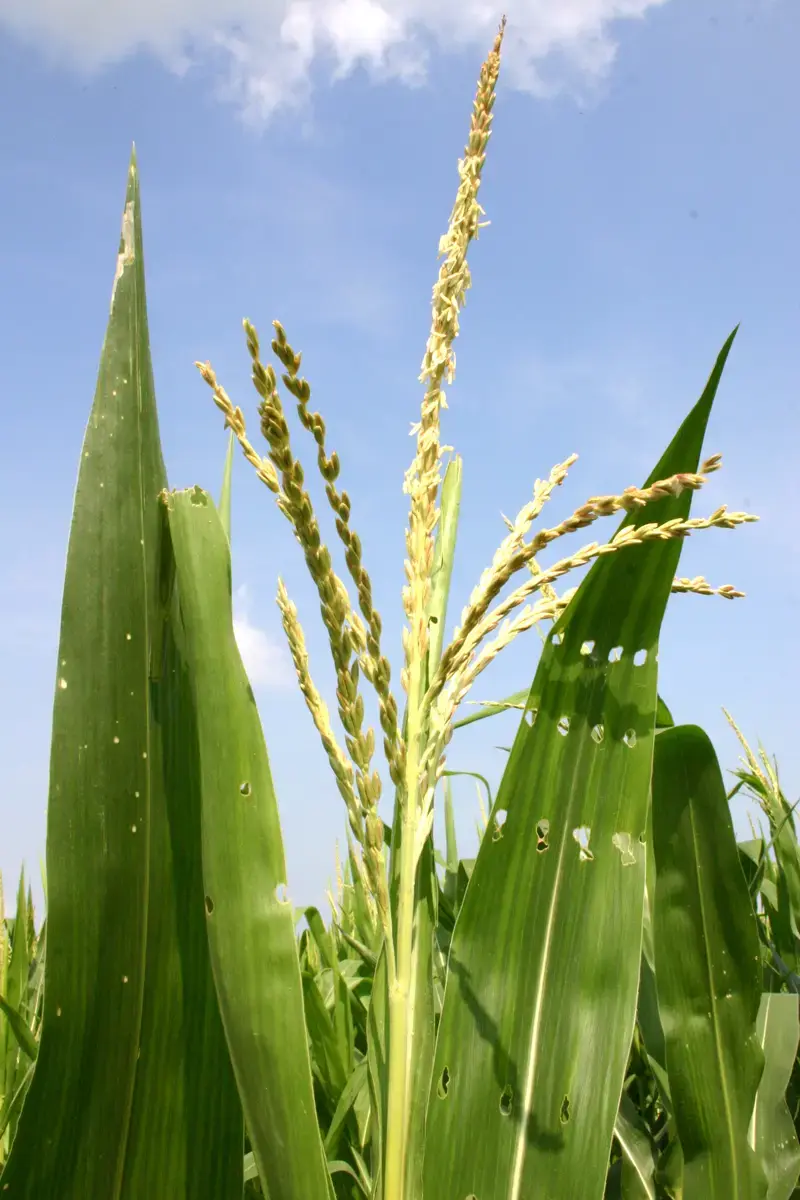
An annual grass growing to 2–3 m, with a thick, solid stem and long, broad leaves. At the top of the plant a tassel of male flowers develops, while the leaf axils bear cobs of female flowers, from which long silks protrude. The cobs, wrapped in husks, hold rows of kernels in colours ranging from white and yellow to red and purple. Maize was domesticated in Mexico about 9,000 years ago and was already grown throughout South America in pre-Columbian times.
Significance in the country
The arepa made from maize flour is a symbol of Venezuelan cooking; since 1960 it has been made mainly with precooked Harina P.A.N. flour, which replaced the laborious hand-grinding of the grain. Maize is also used for cachapas, made from fresh kernels, and hallacas – Christmas parcels wrapped in banana leaves.
Where it grows
Grown throughout the country, and on a large scale on the plains of the Llanos – in the states of Portuguesa, Guárico, Barinas, Cojedes and Yaracuy.
More: Wikipedia (en) Wikipedia (pl)