United States · #5 crop
Maize
Zea mays · locally: corn
The USA is the world’s largest producer of maize – the Corn Belt of the Midwest stretches to the horizon.
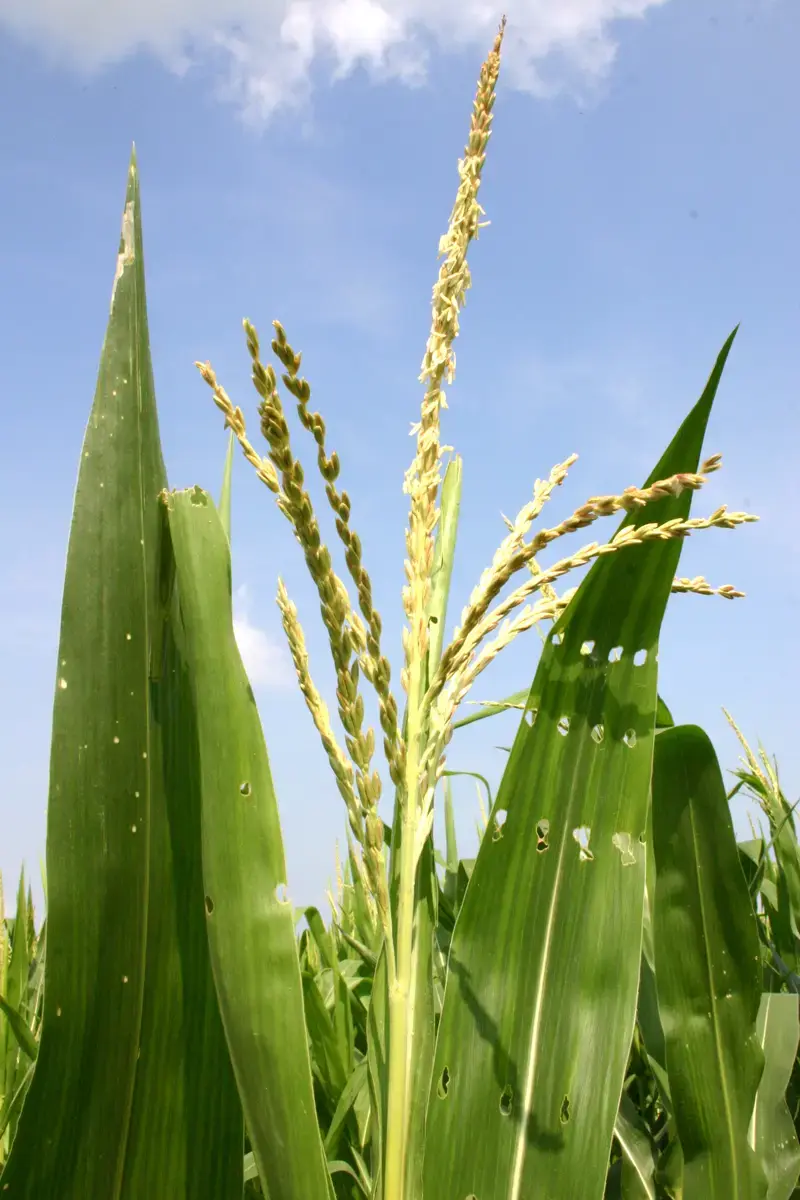
An annual grass growing to 2–3 m, with male flowers in a tassel at the top and female ears in the leaf axils. Domesticated about 9,000 years ago in Mexico from wild teosinte, it was grown in North America by Indigenous peoples long before Europeans arrived. Today it is the basis of animal feed and also a raw material for starch, high-fructose corn syrup and bioethanol. Hybrid varieties and irrigation make very high yields possible.
Significance in the country
The United States harvests about a third of the world’s maize crop, and much of it goes into bioethanol and animal feed. Maize runs through American food and culture – from popcorn and cornbread to fairs with corn mazes in the fields.
Where it grows
Above all the Corn Belt of the Midwest – Iowa, Illinois, Nebraska, Minnesota, Indiana, the Dakotas, Ohio and Wisconsin; smaller crops in Kentucky, Pennsylvania, New York, Texas and Colorado, among others.
More: Wikipedia (en) Wikipedia (pl)