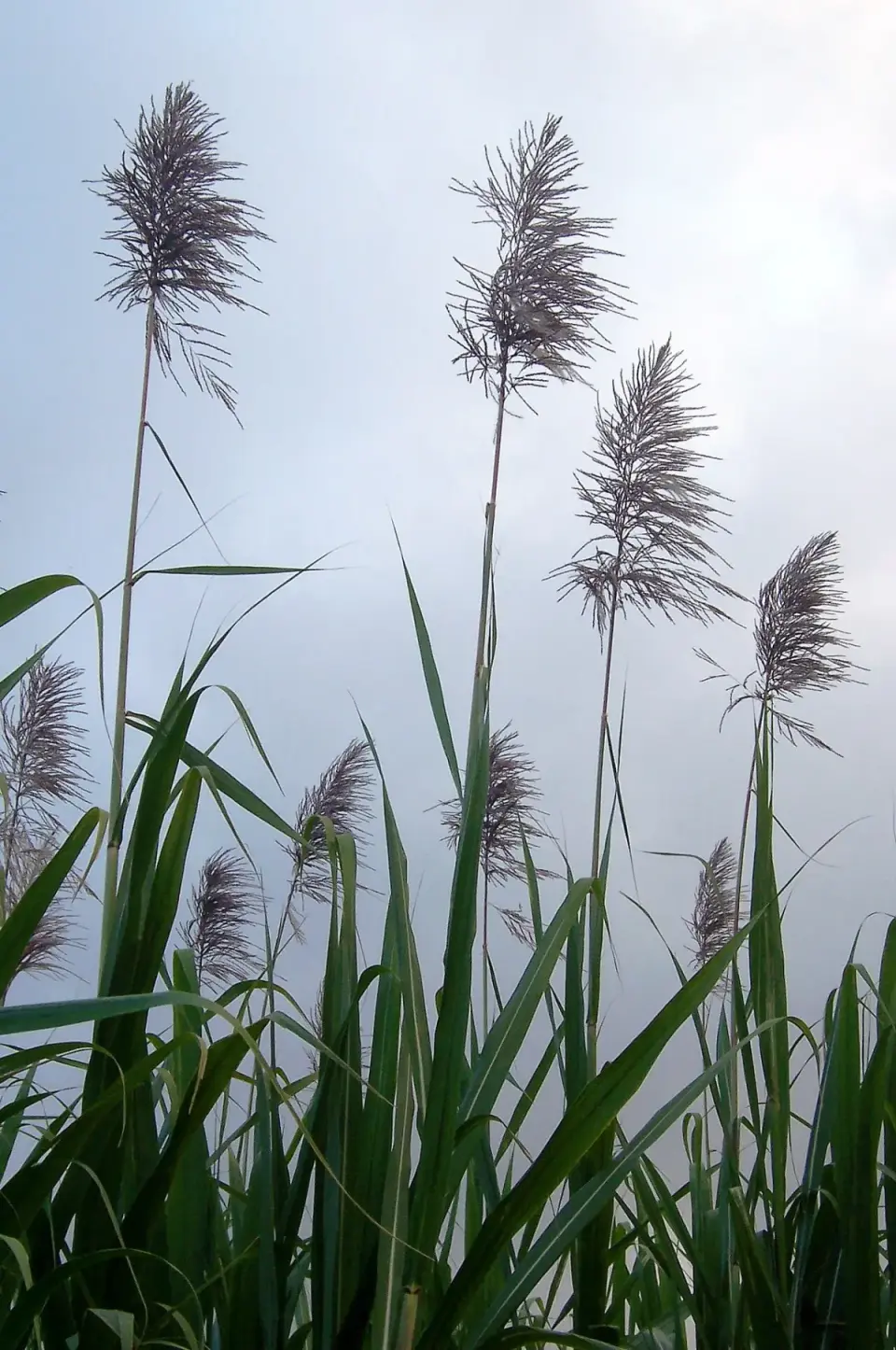
Sugarcane (Saccharum officinarum)
Photo: B.navez, CC BY-SA 3.0, Wikimedia Commons

On the map in 11 countries crop symbol: Barbados

Sugarcane

Saccharum officinarum

Family: Poaceae

On our map this plant appears in 11 countries and ranks highest in: Mauritius, St. Kitts & Nevis, Barbados, Eswatini, Fiji, Guyana and others.

Sugarcane is a perennial grass that forms clumps of thick, jointed stems 3–5 m tall, filled with sweet, juicy pith. It has long, broad leaves with sharp edges, and when it flowers it produces fluffy, silvery panicles. The juice from the stems contains up to about 15% sucrose, which is made into sugar, molasses and rum, as well as bioethanol. The plant is propagated from stem sections and regrows after cutting from the underground part of the clump.

Description from: Papua New Guinea.

More: Wikipedia (en) Wikipedia (pl) Plants of the World Online (Kew)

Significance in each country

  1. Mauritius no. 2 of 5 cultivated

    Sugarcane was brought in by the Dutch in the 17th century, and under the French and the British Mauritius became a sugar island – hundreds of thousands of indentured labourers were brought from India to work on the plantations, shaping the…

  2. St. Kitts & Nevis no. 2 of 5 cultivated

    Saint Kitts was one of the oldest sugar colonies in the Caribbean, and its state-run sugar industry operated until 2005; the narrow-gauge railway built to carry the cane now circles the island as the St. Kitts Scenic Railway, and wild cane…

  3. Barbados no. 3 of 5 cultivated

    Two crossed stalks of sugarcane in the crest of the coat of arms of Barbados

    In the 1640s Barbados became the first Caribbean island to switch to large sugarcane plantations, making it the richest English colony; it is home to the oldest known brand of rum (Mount Gay, 1703), and the end of the harvest is celebrated…

  4. Eswatini no. 3 of 5 cultivated

    Eswatini is one of Africa’s largest sugar producers, and the sugar industry provides a large share of export earnings and jobs. The plantations around Simunye, Mhlume and Big Bend are watered by the Mbuluzi, Komati and Usuthu rivers.

  5. Fiji no. 3 of 5 cultivated

    Between 1879 and 1916 the British brought more than 60,000 indentured labourers from India to the cane plantations – their descendants, the Indo-Fijians, today make up more than a third of the country’s population.

  6. Guyana no. 3 of 5 cultivated

    Cane plantations shaped Guyana’s history and society: they were worked by enslaved Africans and later by indentured labourers from India, Portugal and China; “demerara” sugar and Demerara rum made the country famous.

  7. Cape Verde no. 4 of 5 cultivated

    Grogue, distilled from cane juice pressed in traditional trapiche mills, is Cape Verde’s national drink, and making it supports many families on Santo Antão and Santiago.

  8. Cuba no. 4 of 10 cultivated

    From the 18th century Cuba was one of the world’s largest sugar exporters, and plantations worked by enslaved people shaped its society and culture.

  9. Colombia no. 6 of 15 cultivated

    Colombia is one of the world’s largest producers of panela and has one of the highest per-capita consumptions of this sugar; aguapanela with lime or cheese is an everyday drink in the Andes.

  10. Papua New Guinea no. 8 of 10 native

    New Guinea is regarded as the place where sugarcane was domesticated, from where the plant spread across South-East Asia, the Pacific and on to the rest of the world.

  11. Brazil no. 11 of 15 cultivated

    In the 16th and 17th centuries sugarcane plantations in Pernambuco and Bahia, worked by enslaved Africans, made Brazil the world’s largest sugar producer.