Romania · #7 crop
Maize
Zea mays · locally: porumb
For centuries mămăligă made from maize flour was the daily bread of the Romanian countryside, and maize fields dominate the lowlands of Wallachia and Banat.
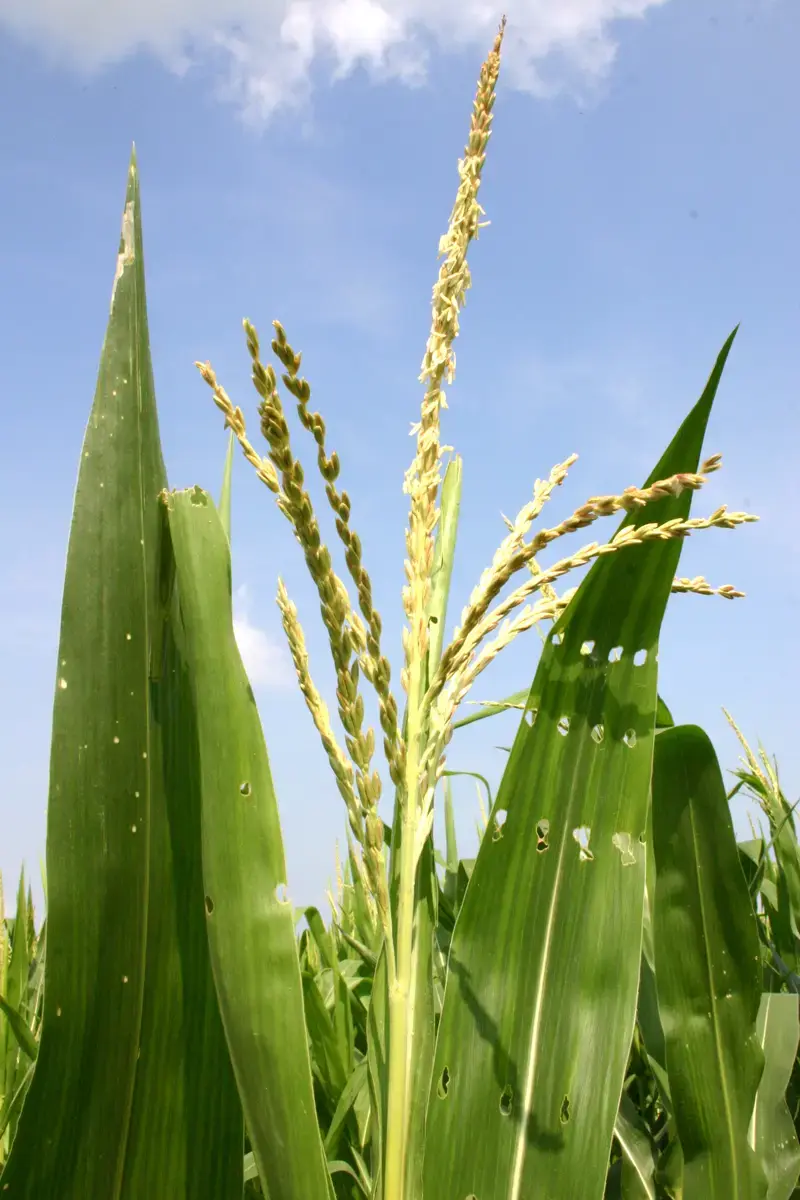
A tall annual cereal grass with a thick, solid stem and long, broad leaves, growing to 2–3 m. A male tassel grows at the top of the plant, and lower down, in the leaf axils, are the cobs with female flowers, which after pollination develop rows of kernels. It originates in Mexico, where it was domesticated several thousand years ago, and is today the cereal with the largest harvests in the world. The grain is used as food and fodder and as a raw material for making starch, oil and bioethanol.
Significance in the country
Maize reached the Romanian lands in the 17th–18th centuries and replaced millet as the basis of mămăligă, served with brânză cheese, sour cream and sarmale. Romania is now one of the largest maize producers in the European Union.
Where it grows
Above all in the lowlands – on the Wallachian Plain (Oltenia, Muntenia, Bărăgan), in Banat, Crișana and Moldavia; in the mountains only in small fields beside homes.
More: Wikipedia (en) Wikipedia (pl)