Poland · #6 tree
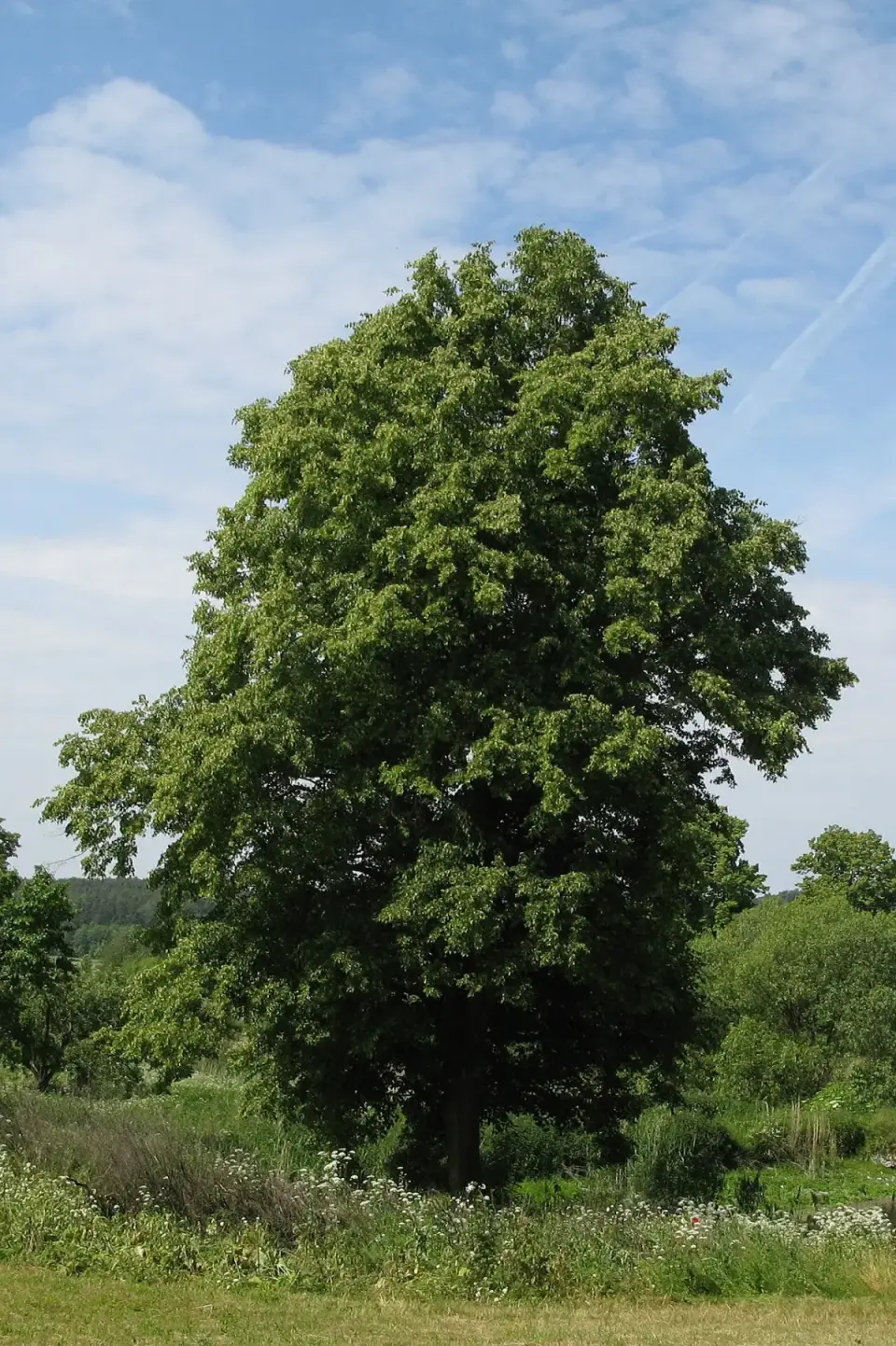
Small-leaved lime
Tilia cordata · locally: lipa drobnolistna
The sacred tree of the Slavs, celebrated by the poet Jan Kochanowski – July in Polish, lipiec, takes its name from the lime (lipa).
The small-leaved lime is a tree growing to 30 m, with a dense, domed crown and heart-shaped leaves that have tufts of rusty hairs in the vein axils underneath. In July it produces masses of intensely fragrant, yellowish flowers in clusters joined to a pale, tongue-shaped bract. The flowers are a valuable source of nectar for bees and a herbal remedy – lime-blossom tea has been used for colds for centuries. Its soft, even-grained wood is ideal for carving, which is why statues of saints and altarpieces were made from it.
Significance in the country
The lime was revered by the early Slavs, and planted beside houses, wayside shrines and manor houses it was believed to protect against lightning and evil. In literature it was immortalised by Jan Kochanowski in his epigram “Na lipę” (“To the Lime Tree”), and Veit Stoss carved the figures of the altarpiece in Kraków’s St Mary’s Basilica from limewood.
Where it grows
Throughout the country in oak–hornbeam and mixed forests, as well as in parks, avenues, on village greens and beside wayside shrines; the oldest specimens grow beside churches and manor houses.
More: Wikipedia (en) Wikipedia (pl)