Poland · #12 crop cultivated
Rye
Secale cereale · locally: żyto
Family: Poaceae
The grain of wholemeal bread, żurek and sourdough – for decades Poland has been one of the world’s largest rye producers.
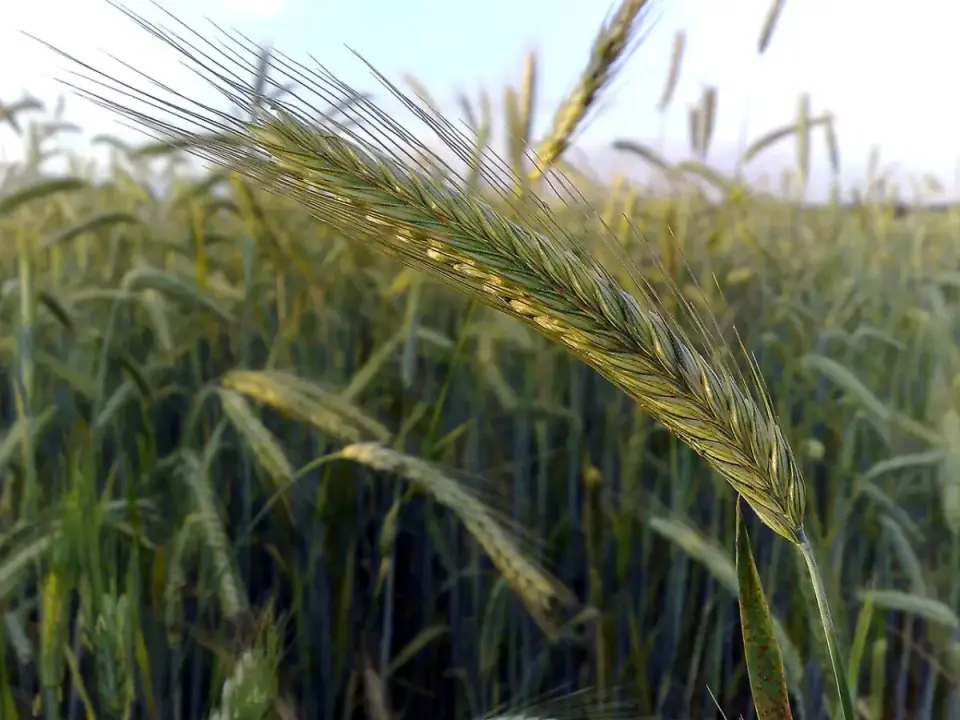
Rye is an annual cereal grass growing to 2 m, with long, slender, bearded ears and a bluish bloom on its stems. It is the most frost-hardy and least demanding of cereals – it yields well on sandy, acidic soils where wheat fails. Unlike wheat and barley it is wind-pollinated and cross-pollinating, so when it flowers clouds of yellow pollen drift over the fields. Rye flour is used to bake dark sourdough bread, and the grain is also made into flakes, vodka and animal feed.
Significance in the country
On the poor, sandy soils of the lowlands rye was for centuries the staple cereal of the Polish countryside – hence the tradition of wholemeal bread, żur and żurek soups made with rye sourdough, and harvest-festival wreaths of ears. Together with Germany and Russia, Poland is one of the world’s leading rye producers.
Where it grows
Grown throughout the country, most often on light, sandy soils – in Greater Poland, Masovia, Podlasie, Kuyavia and the Łódź Voivodeship.
A cultivated plant – the World Checklist of Vascular Plants (Kew) does not record it growing wild here. Source and licence
More: Wikipedia (en) Wikipedia (pl) Plants of the World Online (Kew)