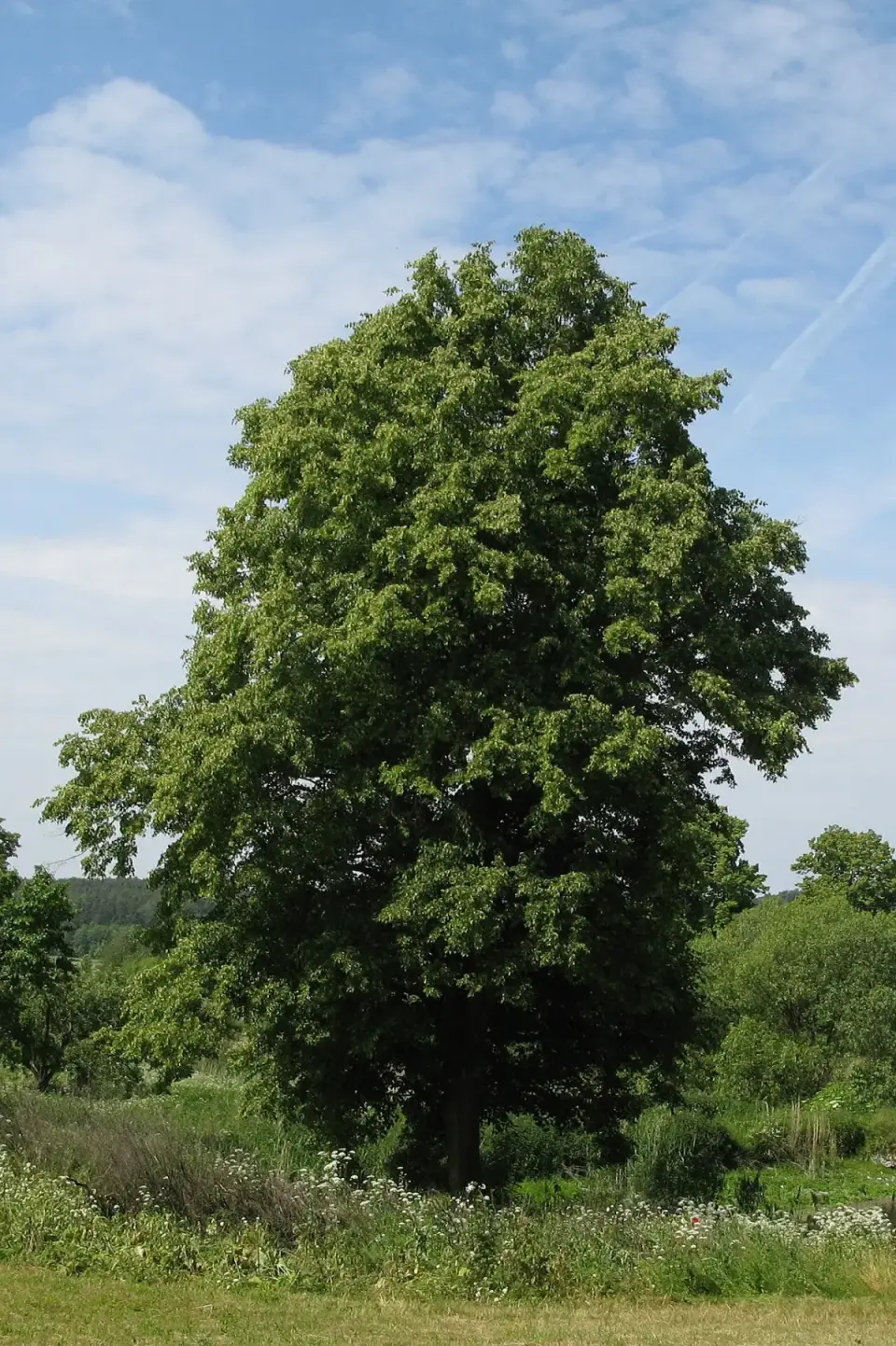
Russia · #9 tree
Small-leaved lime
Tilia cordata · locally: липа мелколистная (lipa mielkolistnaja)
Lime bast was woven into bast shoes, its wood is carved into matryoshkas and icon panels, and Bashkir lime honey is famous across Russia.
The small-leaved lime is a long-lived broadleaf tree growing to 30 m, with a dense, domed crown and small heart-shaped leaves. In early summer it bears fragrant, yellowish flowers in clusters joined to a pale, wing-like bract, which helps the wind disperse the fruits. The flowers are one of the most valuable sources of nectar for bees, and dried, they make a sweat-inducing herbal tea. Beneath the bark lies strong, fibrous bast, and its soft, pale wood carves easily and does not crack.
Significance in the country
The lime has been part of Russian village life for centuries: its bast was woven into lapti – traditional peasant shoes – and its soft wood is carved into matryoshkas, spoons and icon panels. Lime honey, especially from Bashkiria, is regarded as one of the best in the country, and lime-blossom tea is a traditional home remedy for colds.
Where it grows
It forms broadleaf and mixed forests in European Russia, especially in the Volga region and the Urals – the largest lime forests grow in Bashkortostan and Tatarstan; beyond the Urals it survives in a few isolated “lime islands”, including in Kemerovo Oblast.
More: Wikipedia (en) Wikipedia (pl)