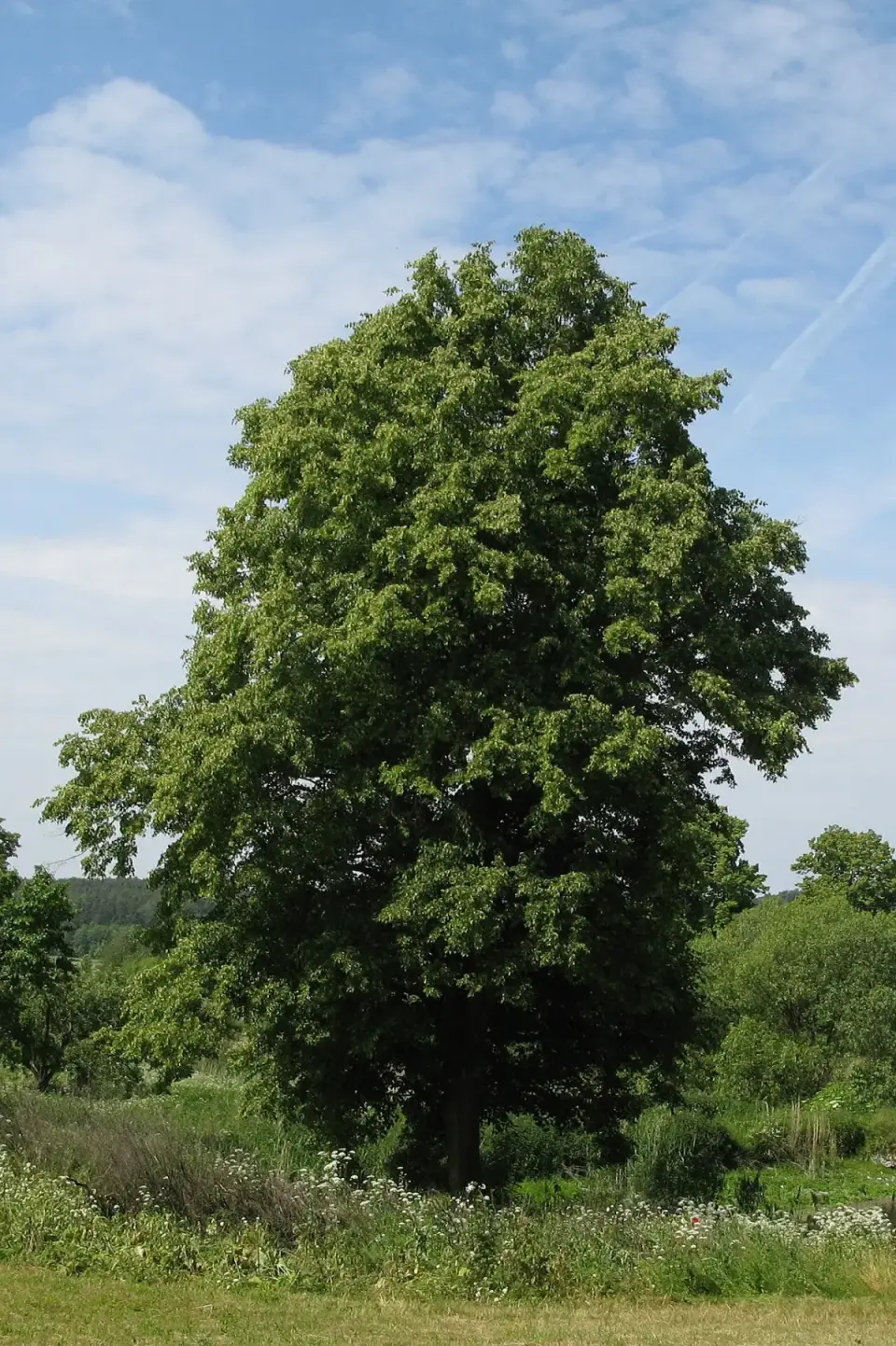
Latvia · #3 tree One of Latvia’s two national trees (with the oak)
Small-leaved lime
Tilia cordata · locally: parastā liepa
The female symbol of Latvian folklore, linked to Laima, the goddess of fate – limes grow beside every old farmstead.
The small-leaved lime is a stately tree with a dense, domed crown and heart-shaped leaves with rusty tufts of hairs in the vein axils underneath. In July it bears yellowish, intensely fragrant flowers hanging from distinctive bracts, visited by millions of bees. It grows in broadleaf and mixed forests on fertile soils and has been planted beside houses, churches and roads for centuries. Its flowers are made into a tea for colds, its bast was once woven into bast shoes and ropes, and its soft wood is used for carving.
Significance in the country
The lime is one of Latvia’s two national trees – it symbolises femininity, tenderness and care and is associated with Laima, the goddess of fate. Lime-blossom tea is a Latvian home remedy, and lime honey is one of the country’s most prized honeys.
Where it grows
Throughout the country in mixed forests, parks, beside farmsteads and churches; most old limes grow in the manor parks of Courland, Zemgale and Vidzeme.
More: Wikipedia (en) Wikipedia (pl)