Libya · #2 tree
Olive
Olea europaea · locally: zaytuna (زيتونة)
Roman Tripolitania was famed for its olive oil, and the olive groves of the Jafara plain and the Nafusa Mountains are still Libya’s most important orchards.
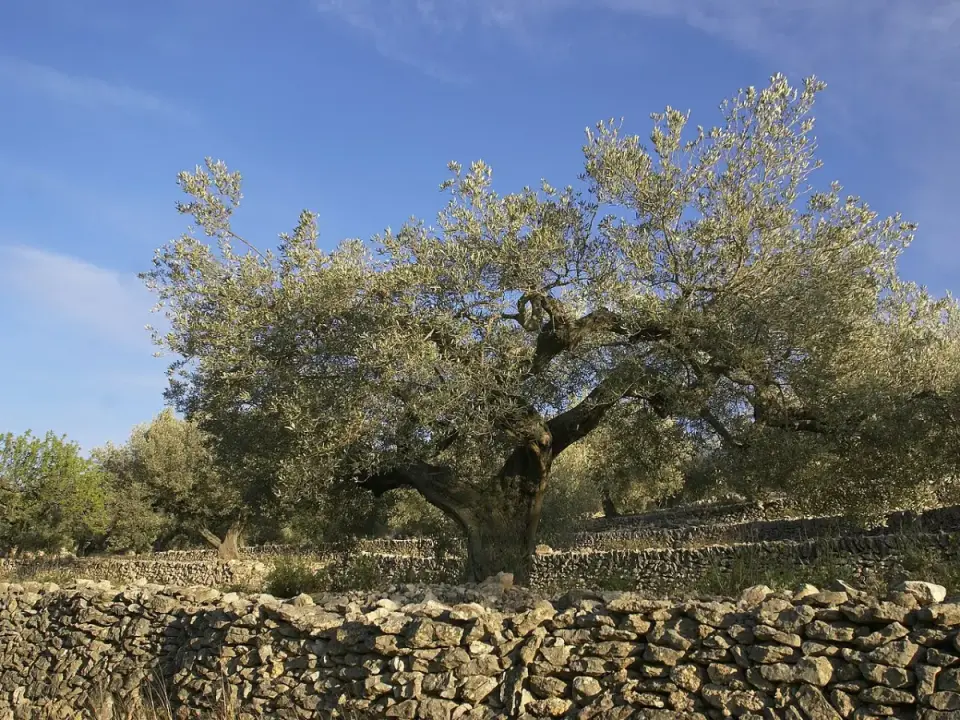
An evergreen tree with a thick, twisted trunk that resprouts from the base when cut down and can live for more than a thousand years. The leaves are narrow, leathery and silvery beneath, which reduces water loss in a dry climate. The fruits ripen in autumn and winter – green or black olives are picked by hand or shaken from the trees onto sheets spread underneath. In antiquity olive oil was used not only as food but also as lamp fuel and a base for cosmetics.
Significance in the country
In Roman times Tripolitania was a powerhouse of olive oil production, and the ruins of numerous ancient oil presses survive in the Libyan interior. Today the olive groves of Jafara and Jabal Nafusa, including those around Gharyan and Tarhuna, remain the country’s most important tree crops.
Where it grows
Mainly in Tripolitania – on the Jafara plain, around Tripoli, Zawiya, Misrata and Tarhuna and on the slopes of Jabal Nafusa; smaller groves also on Jabal al Akhdar in Cyrenaica.
More: Wikipedia (en) Wikipedia (pl)