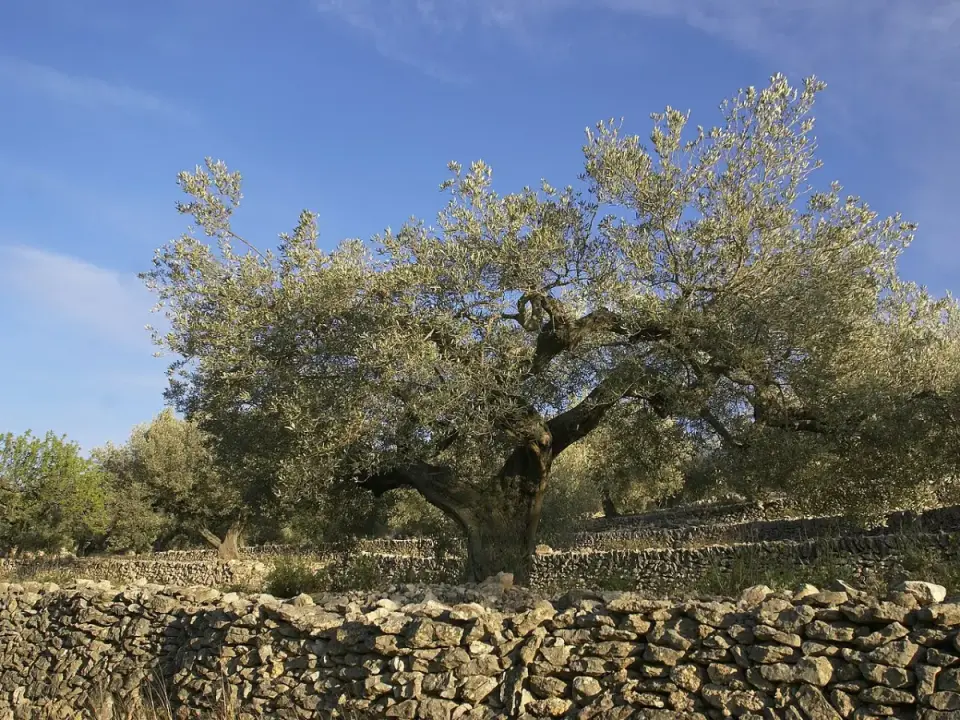
Morocco · #6 tree
Olive
Olea europaea · locally: zitun (زيتون)
The olive is Morocco’s most important fruit tree – groves stretch from the Saïs plain to Marrakesh, and cured olives are on every table.
An evergreen tree of the olive family, growing 8–15 m tall, with a thick trunk that becomes gnarled with age and narrow, leathery leaves – dark green above and silvery beneath. Small, creamy white flowers open in clusters in spring, and the fruits – drupes – ripen in autumn, turning from green to purplish black. The tree is very long-lived and tolerates drought and poor, stony soils well. The fruit is pressed for olive oil, or cured in brine to remove its bitterness and eaten as a snack.
Significance in the country
Morocco is one of the world’s leading producers of olive oil and table olives, and the most widespread variety is picholine marocaine. Olives – green, purple and black, often with preserved lemon and spices – accompany tagines and almost every meal.
Where it grows
Most groves lie on the Saïs plain around Fez and Meknes, in the Taounate area, in Al Haouz near Marrakesh and in the Tadla-Azilal region; olives also grow in the north and east of the country.
More: Wikipedia (en) Wikipedia (pl)