Saudi Arabia · #9 tree
Olive
Olea europaea · locally: zajtun (زيتون)
In the desert north, in Al-Jouf, millions of olive trees have sprung up – some of the largest modern olive groves in the world.
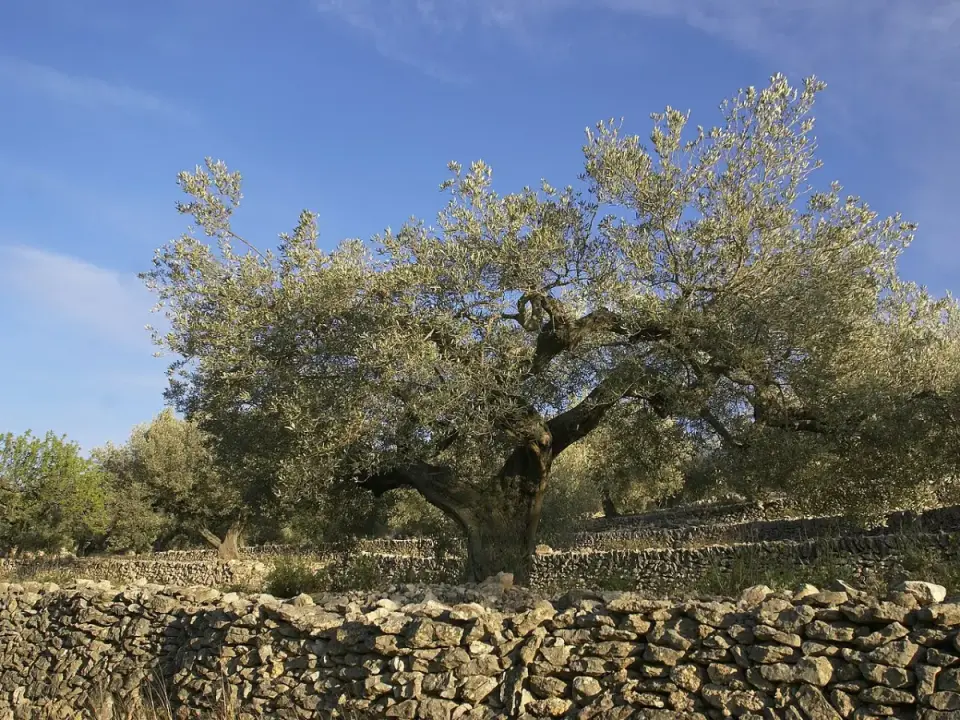
An evergreen, long-lived tree growing 8–15 m tall, with a gnarled grey trunk and narrow, leathery leaves – dark green above and silvery beneath. The small, creamy white flowers are borne in clusters, and the fruits – olives – are drupes that ripen from green to purplish black. The tree tolerates drought and heat but needs a cooler winter to fruit abundantly. The fruit is pressed for olive oil, and fresh olives are bitter and must be cured before they can be eaten.
Significance in the country
In the Al-Jouf region, thanks to deep groundwater, plantations numbering millions of trees have been established in recent decades, making Saudi Arabia a significant olive oil producer in the Middle East. An olive festival is held in Sakaka every year, and the olive is mentioned in the Quran as a blessed tree.
Where it grows
Mainly Al-Jouf (around Sakaka and Dumat al-Jandal) and the neighbouring northern provinces of Tabuk, the Northern Borders and Hail.
More: Wikipedia (en) Wikipedia (pl)