Türkiye · #10 crop
Olive
Olea europaea · locally: zeytin
Olive groves line Turkey’s Aegean and Mediterranean coasts, and Gemlik olives and Ayvalık olive oil are known throughout the country.
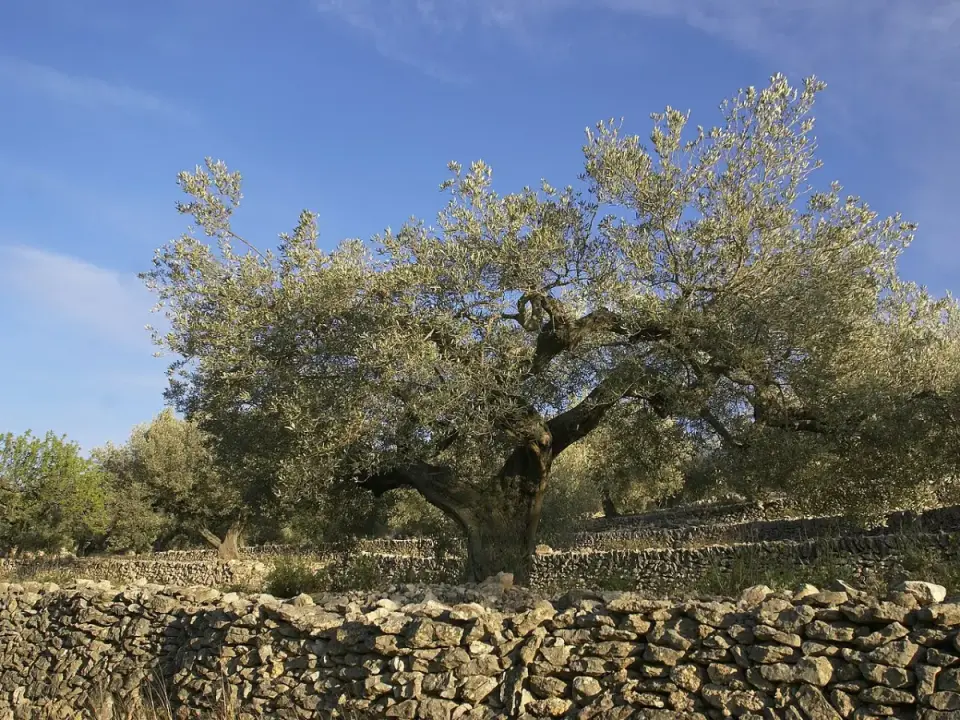
An evergreen, long-lived tree with silvery, lance-shaped leaves and a gnarled, twisted trunk that can live for hundreds of years. In late spring it bears small, creamy-white flowers, and in autumn its drupes ripen – first green, then purple and black. It tolerates drought, heat and stony soils but cannot withstand hard frosts, so it grows mainly on coasts with mild winters. Once their bitterness has been removed, the fruits are eaten as table olives or pressed for oil.
Significance in the country
Turkey is one of the world’s largest producers of olives and olive oil. Black olives from Gemlik and olive oil from Ayvalık and the Gulf of Edremit are Turkish classics, and a bowl of olives beside cheese and tomatoes is part of every Turkish breakfast (kahvaltı).
Where it grows
Mainly in the Aegean region (Balıkesir, İzmir, Aydın, Muğla, Manisa) and around the Sea of Marmara (Bursa with Gemlik, Çanakkale), as well as on the Mediterranean coast (Hatay, Mersin) and in south-eastern Anatolia (Gaziantep, Kilis).
More: Wikipedia (en) Wikipedia (pl)