Libya · #5 herbaceous plant
Colocynth
Citrullus colocynthis · locally: handal (حنظل)
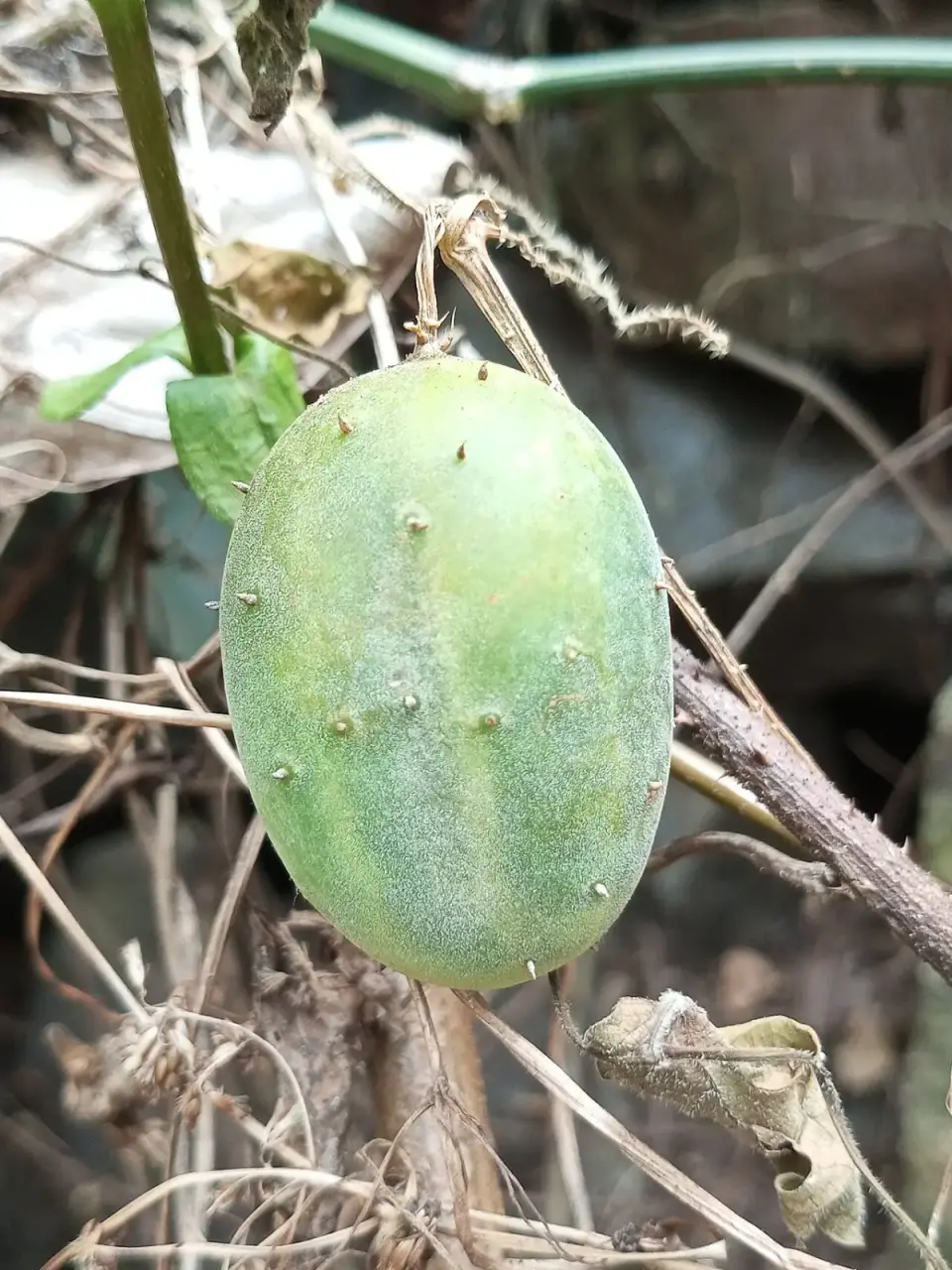
The bitter, round fruits of the colocynth lie on the sand like abandoned balls – one of the best-known plants of the Libyan desert.
A trailing perennial of the gourd family, with deeply lobed, rough leaves and yellow flowers. It bears round fruits the size of an orange, green with pale stripes, which turn yellow and dry out when ripe. The pulp is extremely bitter and poisonous – in former times it was used in medicine as a powerful purgative. The plant has a deep taproot that lets it survive on the dry sands of wadis and desert plains. The seeds, once the bitterness was removed, were eaten in times of famine and pressed for oil.
Significance in the country
The colocynth, known in Arabic as handal, is a typical feature of the landscape of Libya’s wadis and plains, from Jafara to Fezzan. Herders and oasis dwellers have known it for centuries as a remedy, while warning against its poisonous fruits.
Where it grows
Across almost the whole country – on sandy plains, in wadi beds and on the fringes of oases, from the coast of Tripolitania to Fezzan and Kufra.
More: Wikipedia (en) Wikipedia (pl)