Chile · #6 crop
Grapevine
Vitis vinifera · locally: vid (uva Carménère)
Chile’s vineyards stretch from the Atacama to Biobío – the country is famous for Carménère, and muscat grapes are distilled into pisco.
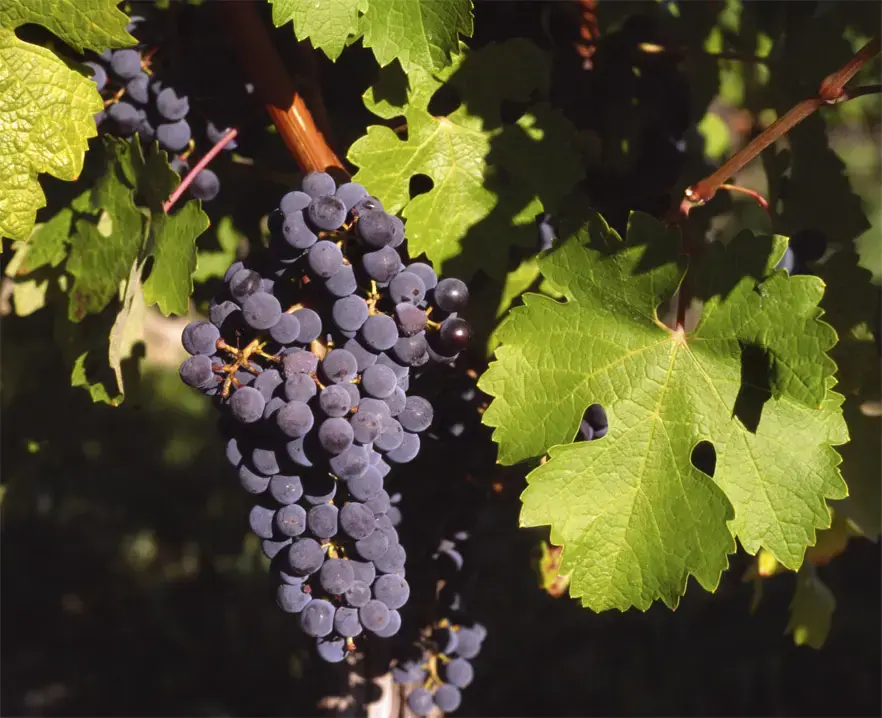
The grapevine is a long-lived climber of the grape family with lobed leaves, clinging to supports with tendrils. Its small, greenish flowers, borne in panicles, develop into bunches of berries used for wine, raisins and spirits. Chile offers the vine exceptional conditions: dry, sunny summers, cool nights thanks to the Humboldt Current and breezes from the Andes, and natural barriers – desert, mountains and ocean. Because of them Chilean vineyards have never been attacked by phylloxera, and the vines grow here on their own roots.
Significance in the country
Varieties brought from France in the 19th century survived in Chile the phylloxera plague that destroyed Europe’s vineyards. In 1994 it turned out that some Chilean “Merlot” was in fact Carménère, a forgotten Bordeaux variety that is now the country’s calling card; muscat grapes in the Atacama and Coquimbo are distilled into pisco.
Where it grows
In the valleys of central Chile – Maipo, Colchagua, Curicó, Maule, Casablanca and Aconcagua – and in the south in Itata and Biobío; grapes for pisco grow in the Elqui, Limarí and Huasco valleys in the north.
More: Wikipedia (en) Wikipedia (pl)