Uruguay · #4 crop
Grapevine
Vitis vinifera · locally: vid (uva Tannat)
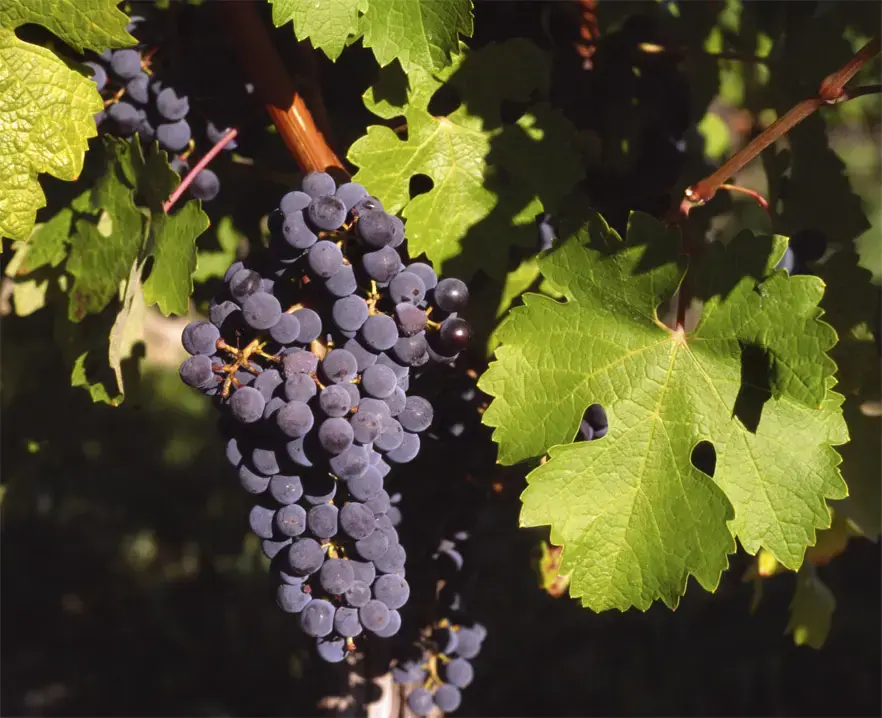
Tannat – a grape from south-western France that found a second home in Uruguay and became its “national grape”.
The grapevine is a climber with woody stems, tendrils and lobed leaves, grown for its fruit for thousands of years. Uruguay’s vineyards are mostly small family estates in a mild, humid oceanic climate, cooled by breezes from the Atlantic and the Río de la Plata estuary. The most important variety is Tannat, which gives dark, tannic, full-bodied wines that, thanks to the local climate, are softer than those of Madiran in France. Merlot, Cabernet Sauvignon and Albariño, among others, are also grown.
Significance in the country
Tannat was brought to Uruguay in 1870 by the Basque immigrant Pascual Harriague; today it is the flagship of Uruguayan wine, and the country is one of the world’s largest producers of wines from this grape.
Where it grows
Above all in the south of the country – in Canelones, Montevideo, San José and Colonia; more and more vineyards are being planted in Maldonado, and in the north in Salto and Rivera.
More: Wikipedia (en) Wikipedia (pl)