Austria · #6 crop
Grapevine
Vitis vinifera · locally: Weinrebe
Grüner Veltliner from the Wachau and Weinviertel is Austria’s calling card, and in Vienna – a capital with its own vineyards – young wine flows in Heurigen.
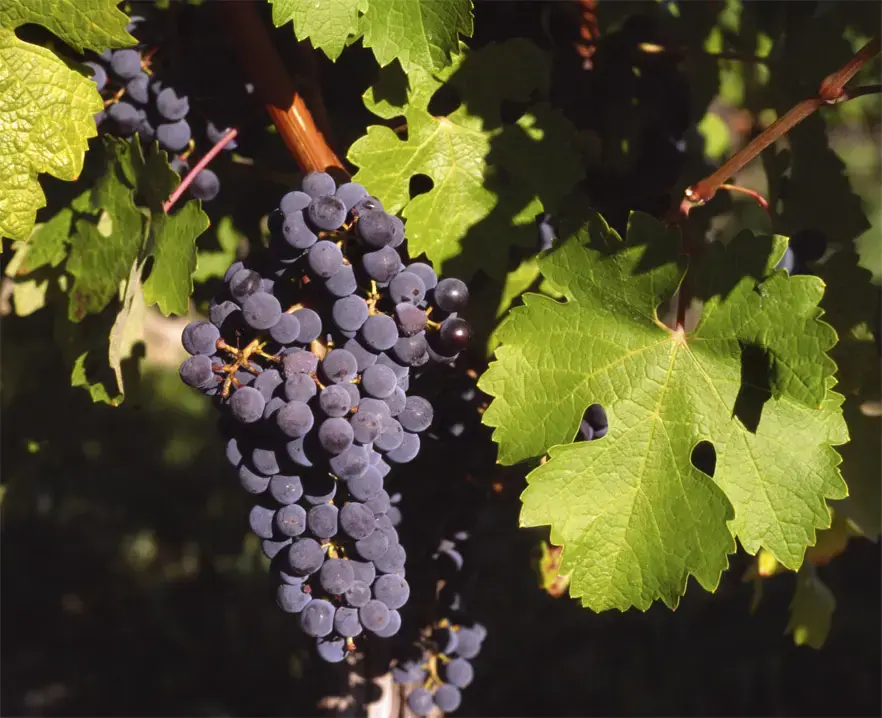
The grapevine is a long-lived woody climber that scrambles up trees in the wild, while in vineyards it is trained on stakes and wires. Its leaves are palmately lobed and toothed, and its inconspicuous greenish flowers – usually bisexual in cultivated varieties – open in June. The fruits are berries gathered in bunches, whose skins contain the pigments and tannins that determine a wine’s colour and character. Vines can bear fruit for several decades.
Significance in the country
Austria is famous for white Grüner Veltliner and red Blaufränkisch, and the Wachau cultural landscape with its terraced vineyards above the Danube is a UNESCO World Heritage Site. After the 1985 scandal, when some producers sweetened their wines with diethylene glycol, Austria brought in some of the strictest wine laws in the world.
Where it grows
Almost all vineyards lie in the east of the country: in Lower Austria (Weinviertel, Wachau, Kamptal, Kremstal), in Burgenland around Lake Neusiedl, in southern Styria and on the outskirts of Vienna.
More: Wikipedia (en) Wikipedia (pl)