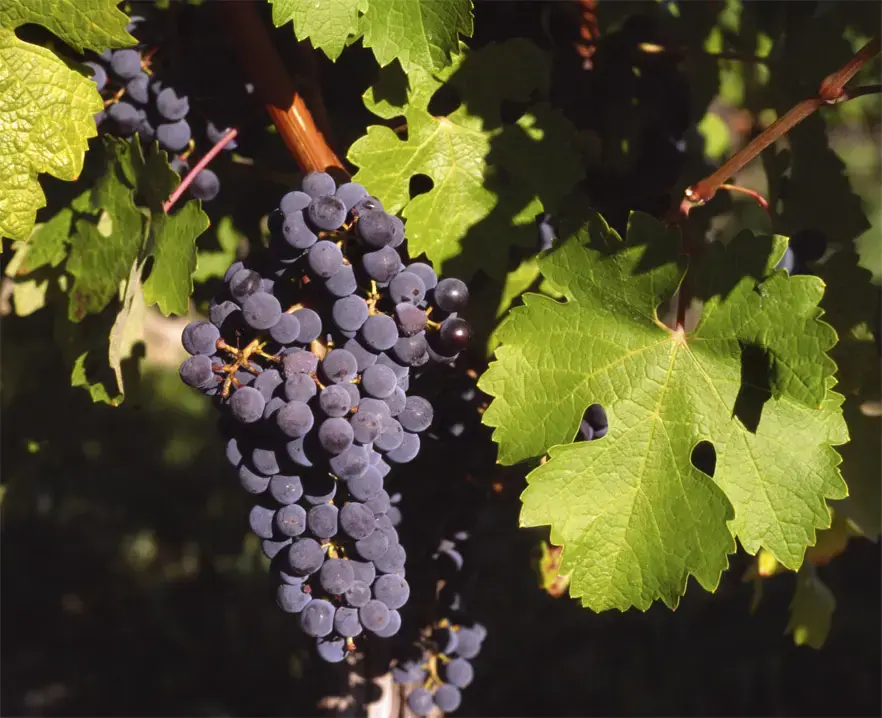
Greece · #6 crop
Grapevine
Vitis vinifera · locally: ampéli (αμπέλι)
The homeland of the cult of Dionysus has grown vines for millennia – from Santorini’s assyrtiko to agiorgitiko from Nemea and xinomavro from Naoussa.
A climber of the grape family with palmately lobed leaves, clinging to supports with forked tendrils. In late spring it bears small, greenish, fragrant flowers in panicles, which develop into bunches of berries – green, pink or deep purple. The vines live for decades, have deep roots and cope well with dry, stony slopes. The fruit is eaten fresh, dried into raisins and made into wine, and the young leaves are used in cooking.
Significance in the country
Greece grows hundreds of native varieties, and vine leaves are wrapped around rice to make dolmadakia. Currants come from the Peloponnese – the English word “currant” derives from the name of Corinth – and on Santorini the vines are traditionally trained into low “baskets” (kouloura) that shield the grapes from the wind.
Where it grows
Throughout the country, from Macedonia and Thrace to Crete and the islands; important wine regions include Nemea and Mantinia in the Peloponnese, Naoussa in Macedonia, Santorini and Crete.
More: Wikipedia (en) Wikipedia (pl)