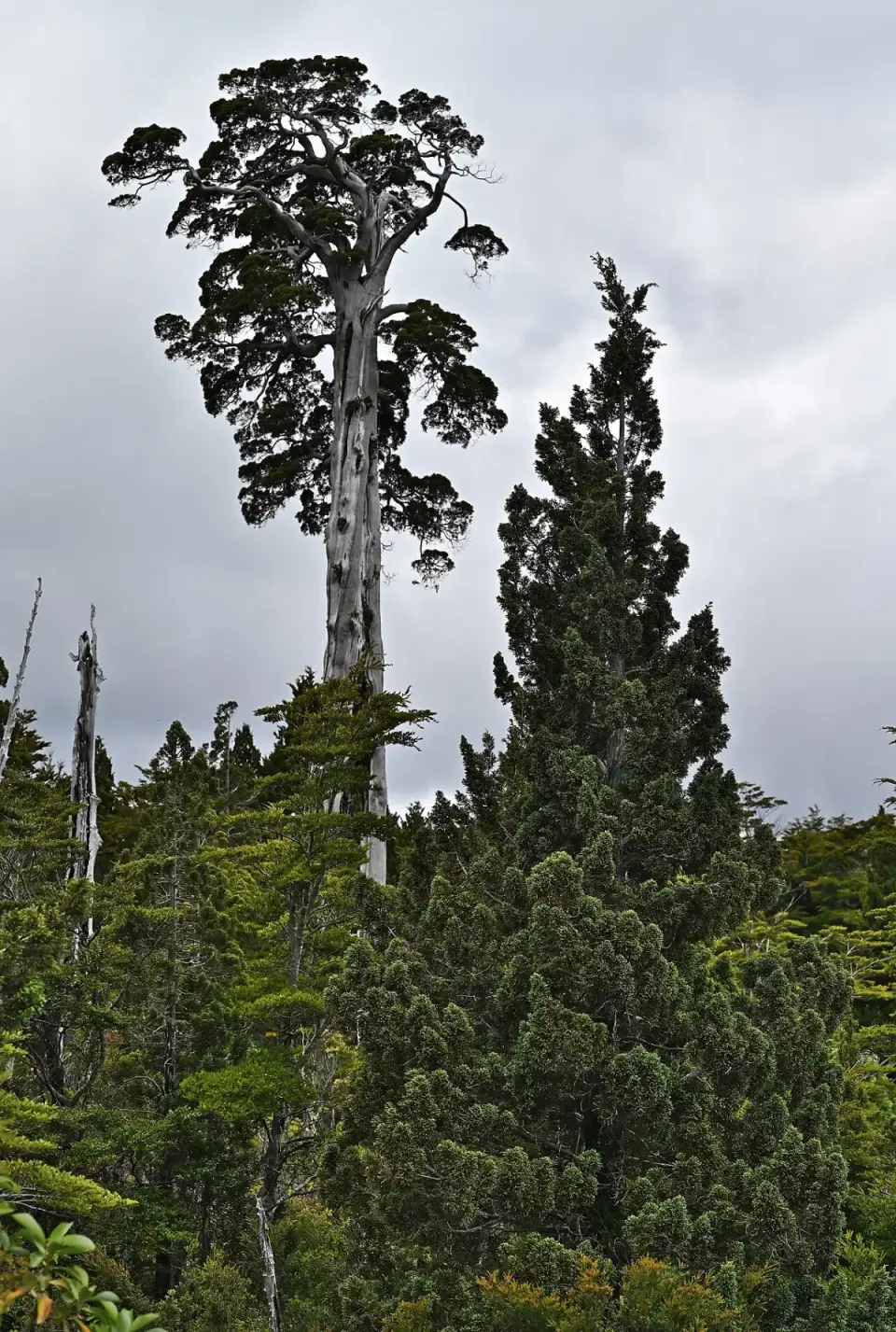
Chile · #3 tree Natural monument of Chile
Alerce
Fitzroya cupressoides · locally: alerce
One of the longest-lived organisms on Earth – the oldest dated alerce is more than 3,600 years old and grows in the forests of southern Chile.
Fitzroya cupressoides, known as the alerce, is a giant conifer reaching 50–60 m, with a trunk up to 4–5 m thick and reddish, fibrous bark. It grows exceptionally slowly in the cool, very rainy mountain climate, on waterlogged, poor soils. After the Great Basin bristlecone pine it is the second tree species with a documented age of more than 3,600 years. Its light, rot-resistant wood was so valuable for centuries that alerce shingles served as currency in colonial Chile. It was named in honour of Robert FitzRoy, captain of the Beagle, on which Charles Darwin sailed.
Significance in the country
Logging drove the alerce to the brink of extinction, so in 1976 it was declared a natural monument; the “Gran Abuelo” in Alerce Costero National Park is regarded as one of the oldest trees in the world.
Where it grows
In the Coastal Range of the Los Ríos and Los Lagos regions, in the Andes of Los Lagos (Alerce Andino National Park) and on the island of Chiloé.
More: Wikipedia (en) Wikipedia (pl)