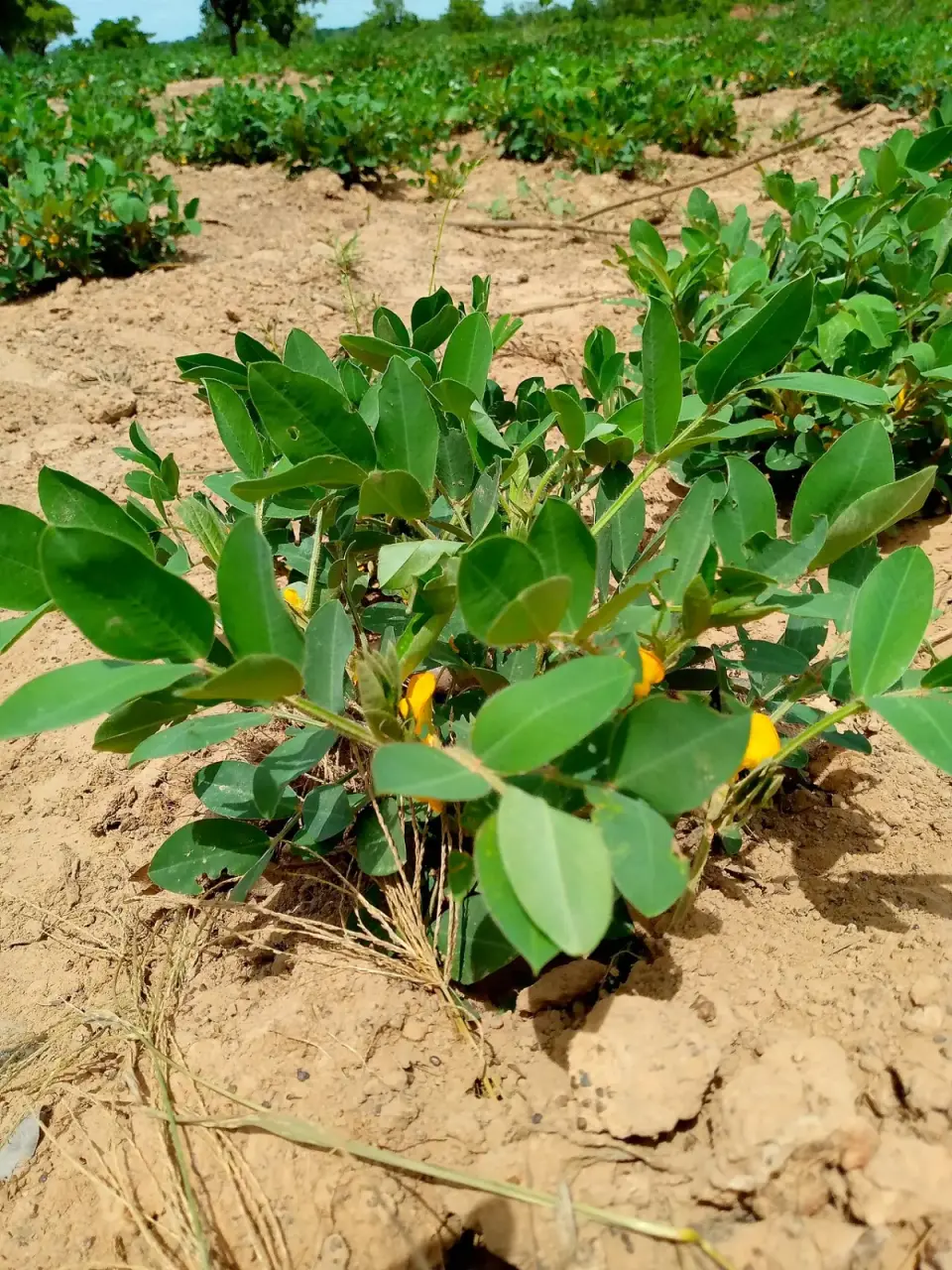
Peanut (Arachis hypogaea)
Photo: Ibn Dagara, CC BY-SA 4.0, Wikimedia Commons

On the map in 3 countries crop

Peanut

Arachis hypogaea

Family: Fabaceae

On our map this plant appears in 3 countries and ranks highest in: Gambia, Senegal, Chad.

The peanut is an annual legume from South America with pinnate leaves and small yellow flowers. After flowering, its flower stalks lengthen and push the developing fruits into the soil – the pods ripen underground. The seeds are almost half fat and rich in protein; they are pressed for oil, made into peanut butter and eaten as a snack. The plant thrives in sandy soils and enriches them with nitrogen.

Description from: Gambia.

More: Wikipedia (en) Wikipedia (pl) Plants of the World Online (Kew)

Significance in each country

  1. Gambia no. 2 of 5 cultivated

    Since colonial times groundnuts have been the Gambia’s main cash crop, and the buying season sets the rhythm of rural life. Domoda – a thick stew in a sauce of ground peanuts – is regarded as the national dish.

  2. Senegal no. 4 of 8 cultivated

    From the mid-19th century groundnuts were the backbone of Senegal’s economy and exports, and their cultivation shaped the landscape and settlement of the centre of the country. A peanut-butter sauce is the basis of the national dish, mafé.

  3. Chad no. 8 of 8 cultivated

    Chad is one of Africa’s larger peanut producers, and growing them is one of the most important sources of income for farmers. Roasted peanuts, peanut butter and oil are everyday ingredients of Chadian cooking.