Gambia · #2 crop
Peanut
Arachis hypogaea · locally: groundnut (ang.), tiyo (mandinka)
Groundnuts are the Gambia’s “gold” – for decades they earned most of its export income, and they are the basis of the national dish, domoda.
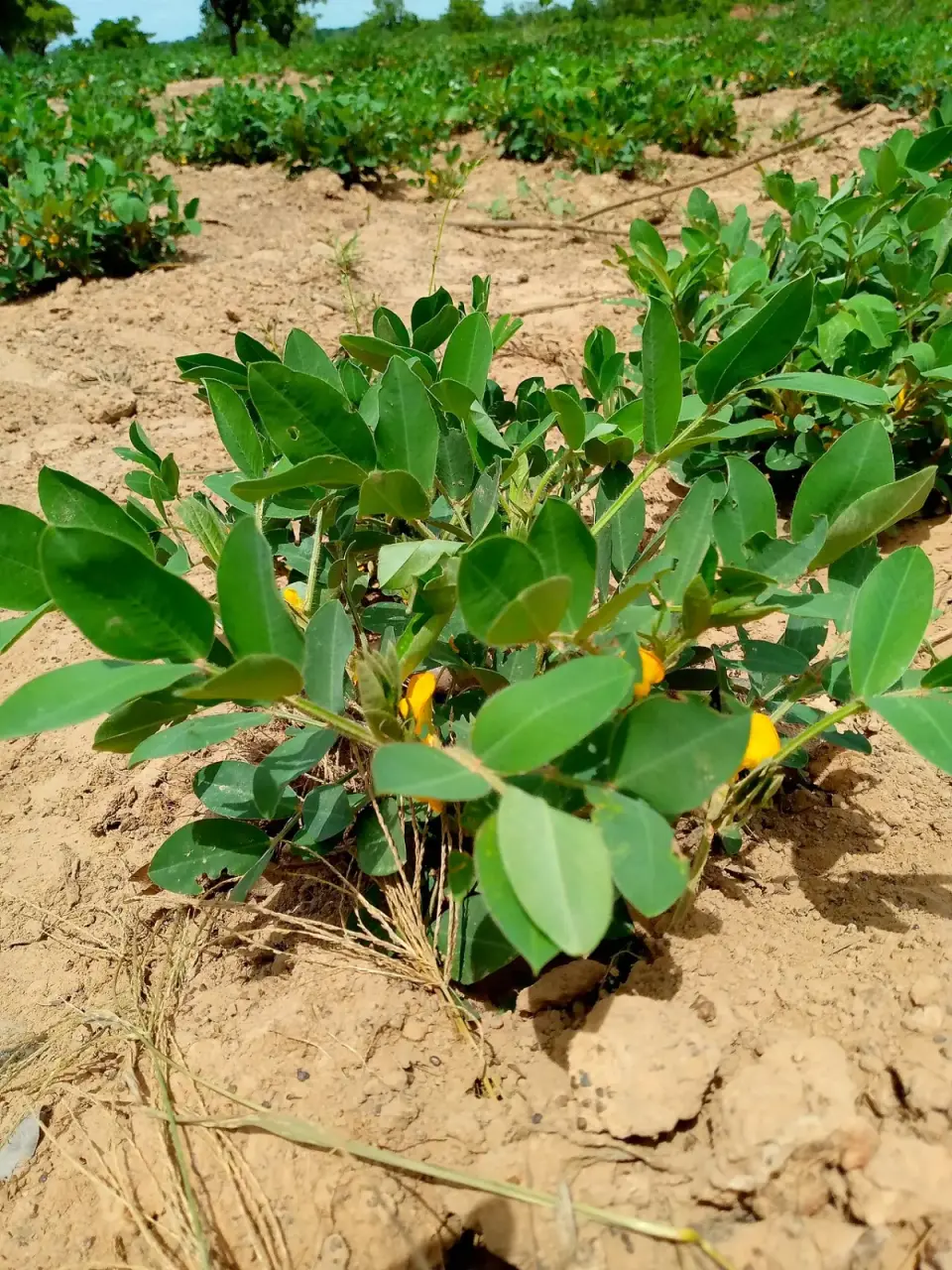
The peanut is an annual legume from South America with pinnate leaves and small yellow flowers. After flowering, its flower stalks lengthen and push the developing fruits into the soil – the pods ripen underground. The seeds are almost half fat and rich in protein; they are pressed for oil, made into peanut butter and eaten as a snack. The plant thrives in sandy soils and enriches them with nitrogen.
Significance in the country
Since colonial times groundnuts have been the Gambia’s main cash crop, and the buying season sets the rhythm of rural life. Domoda – a thick stew in a sauce of ground peanuts – is regarded as the national dish.
Where it grows
Grown on sandy soils throughout the country except Banjul; the most important growing areas lie in the North Bank, Central River and Upper River regions.
More: Wikipedia (en) Wikipedia (pl)