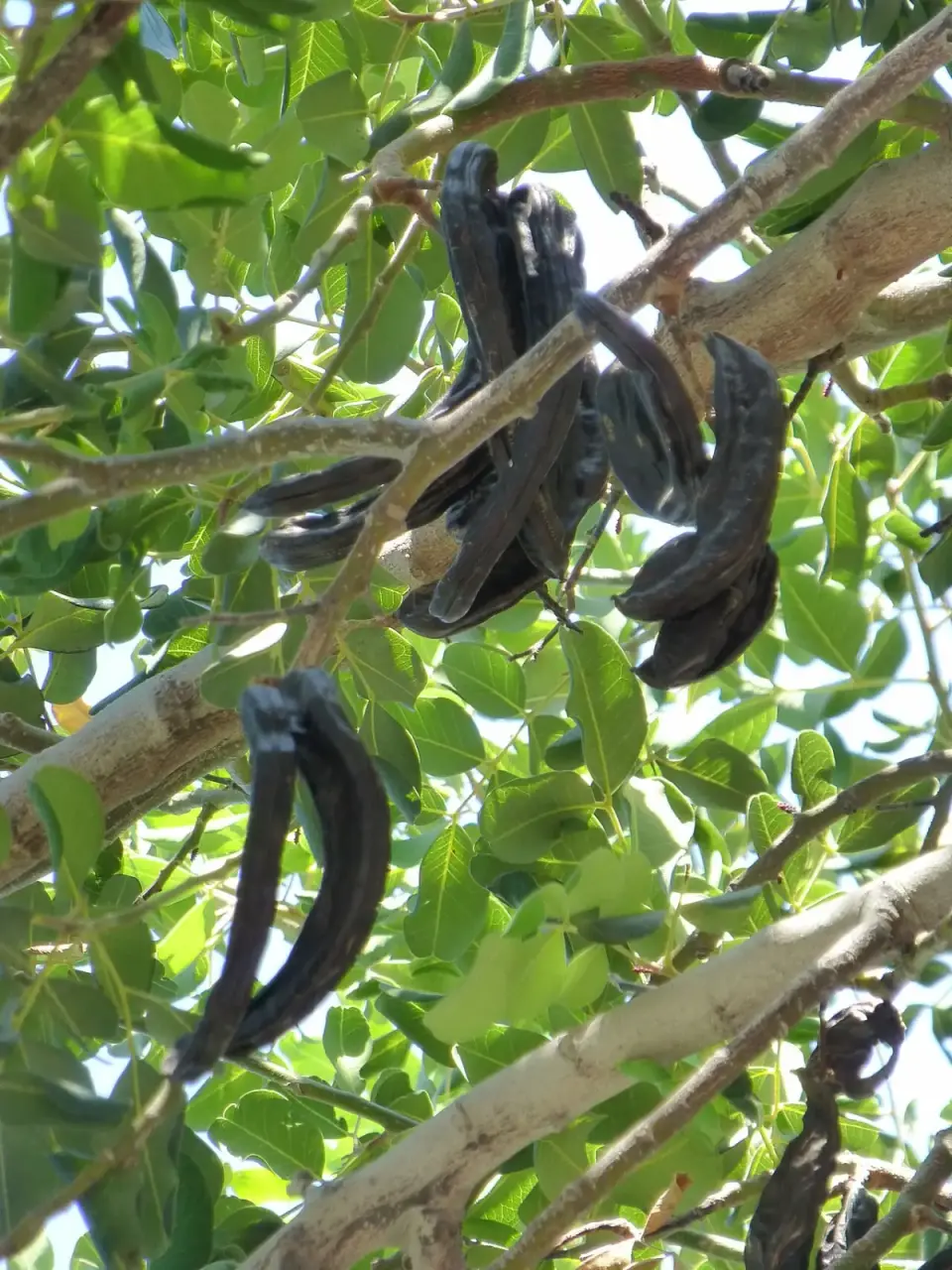
Carob (Ceratonia siliqua)
Photo: Nevit Dilmen (talk), CC BY-SA 3.0, Wikimedia Commons

On the map in 3 countries tree

Carob

Ceratonia siliqua

Family: Fabaceae

On our map this plant appears in 3 countries and ranks highest in: Cyprus, Libya, Portugal.

An evergreen tree with a broad crown and pinnate, leathery, glossy leaves. In autumn it bears small, reddish flowers that sprout directly from the trunk and branches. The fruit is a long, dark brown, sweet pod known as carob or St John’s bread. The hard seeds are so uniform in weight that in antiquity they served as weights – the carat takes its name from them. The tree is highly drought-resistant.

Description from: Cyprus.

More: Wikipedia (en) Wikipedia (pl) Plants of the World Online (Kew)

Significance in each country

  1. Cyprus no. 5 of 5 native

    Carob growing was a pillar of the Cypriot economy; in Limassol a museum occupies a former carob warehouse, and the pods are made into the traditional syrup charoupómelo and pastéli sweets.

  2. Libya no. 7 of 8 native

    The carob is one of the most important trees of the forests and scrub of Jabal al Akhdar in Cyrenaica, where its pods have been gathered for centuries.

  3. Portugal no. 10 of 10 introduced or naturalised

    Alfarroba is the traditional crop of the dry limestone Barrocal belt in the Algarve.