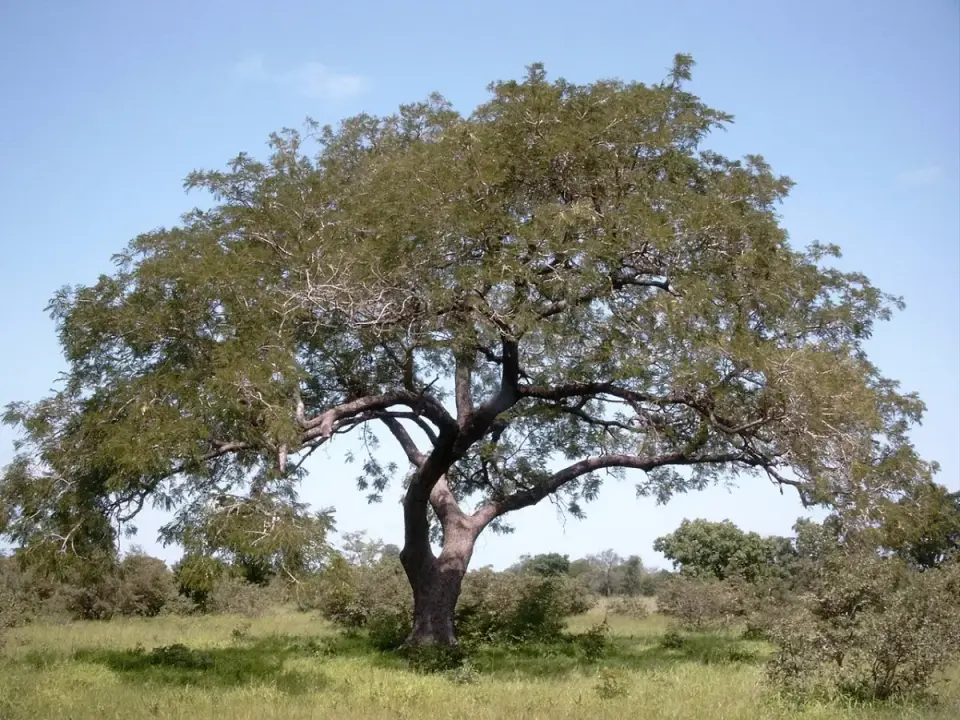
Néré (Parkia biglobosa)
Photo: Vitellaria, CC BY-SA 2.0 de, Wikimedia Commons

On the map in 3 countries tree

Néré

Parkia biglobosa

Family: Fabaceae

On our map this plant appears in 3 countries and ranks highest in: Burkina Faso, Mali, Nigeria.

Parkia biglobosa is a tree of the legume family growing 15–20 m tall, with a broad, umbrella-shaped crown and bipinnate leaves. In the dry season round red flower heads resembling pompoms hang from it on long stalks; they are pollinated mainly by bats. The long pods contain a sweet, yellow, floury pulp and hard seeds. The pulp is eaten raw or mixed with water, while the seeds are boiled and fermented.

Description from: Burkina Faso.

More: Wikipedia (en) Wikipedia (pl) Plants of the World Online (Kew)

Significance in each country

  1. Burkina Faso no. 2 of 5 native

    Fermented néré seeds give soumbala – a traditional seasoning used instead of stock cubes, which the Burkinabè authorities have promoted as a source of culinary pride and part of a healthy diet.

  2. Mali no. 4 of 8 native

    Soumbala made from néré seeds is a traditional ingredient in the cooking of the Bambara and other peoples of Mali, and is now promoted as a natural alternative to stock cubes.

  3. Nigeria no. 5 of 10 native

    In the north of the country the fermented seeds of this tree are dawadawa – the staple seasoning of Hausa cooking – while among the Yoruba the same seasoning is called iru and goes into dishes such as ewedu soup.