Russia · #6 herbaceous plant Unofficial national flower of Russia; symbol of the Day of Family, Love and Fidelity
Chamomile
Matricaria chamomilla · locally: ромашка аптечная (romaszka aptiecznaja)
For Russians, white “romashki” in the meadows symbolise summer and love, and chamomile tea is a home remedy for almost every ailment.
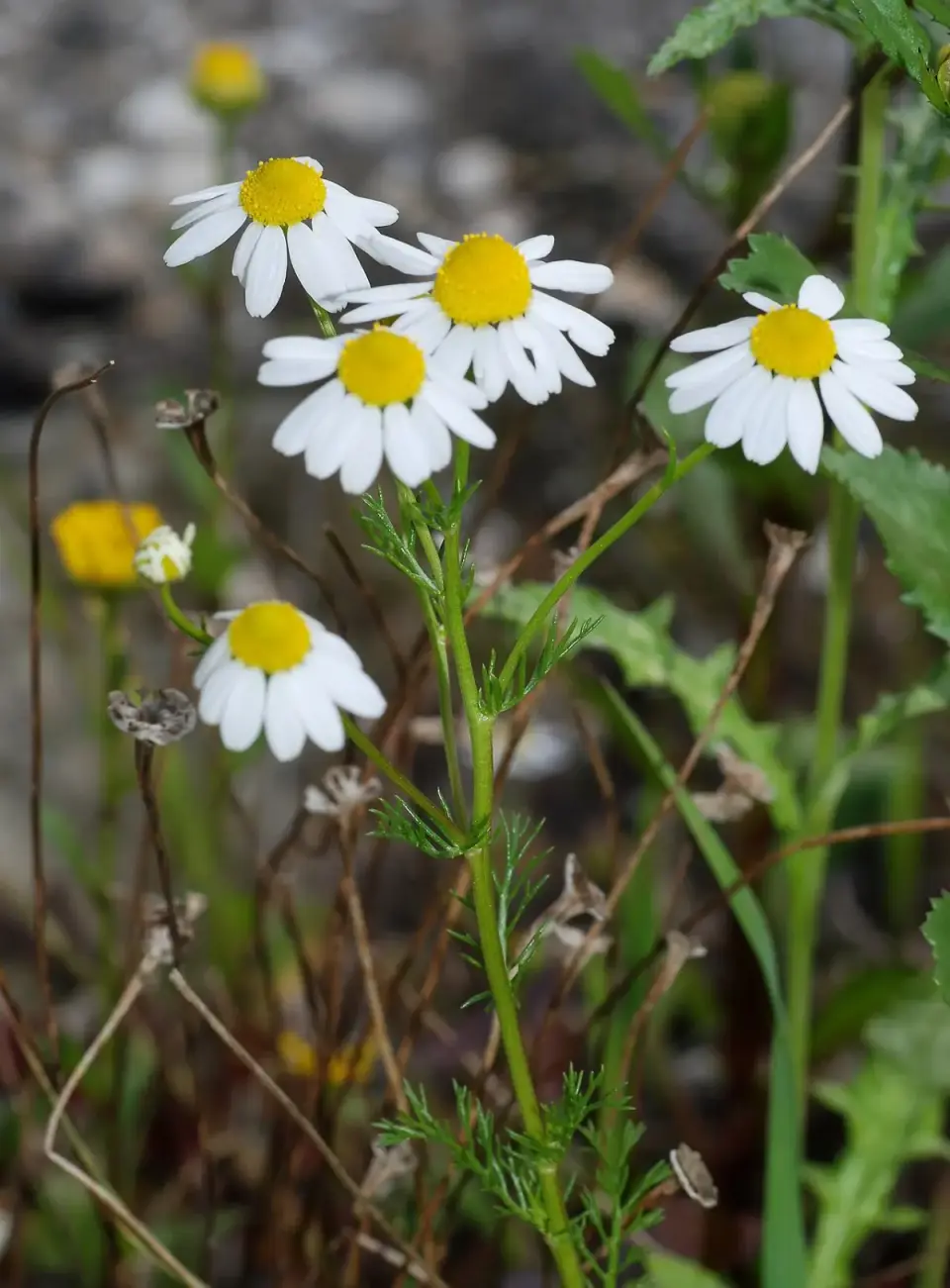
Chamomile is an annual plant of the daisy family, growing to 20–50 cm, with finely divided, thread-like leaves. Its flower heads have white ray florets and yellow disc florets set on a conical receptacle that is hollow inside – a feature that makes it easy to tell apart from similar mayweeds and Anthemis chamomiles. It grows in fields, along roadsides and on waste ground, flowering from May to September. The flower heads contain an essential oil with chamazulene and bisabolol, which gives the infusion its anti-inflammatory, antispasmodic and calming effects.
Significance in the country
In Russia the “romashka” is regarded as the unofficial national flower, and the “loves me, loves me not” game of plucking petals is as popular here as anywhere in Europe. Since 2008 a stylised chamomile has been the symbol of the Day of Family, Love and Fidelity, celebrated on 8 July – the feast of Saints Peter and Fevronia of Murom, patrons of marriage.
Where it grows
Common throughout European Russia – from Kaliningrad Oblast to the North Caucasus and the Urals – and in southern Siberia; rarer in the north, where it grows mainly along roads and around settlements.
More: Wikipedia (en) Wikipedia (pl)