Russia · #8 crop
Sunflower
Helianthus annuus · locally: подсолнечник однолетний (podsołniecznik odnolietnij)
Russia and Ukraine are the largest producers of sunflower seeds and oil, and cracking “semechki” is a national pastime.
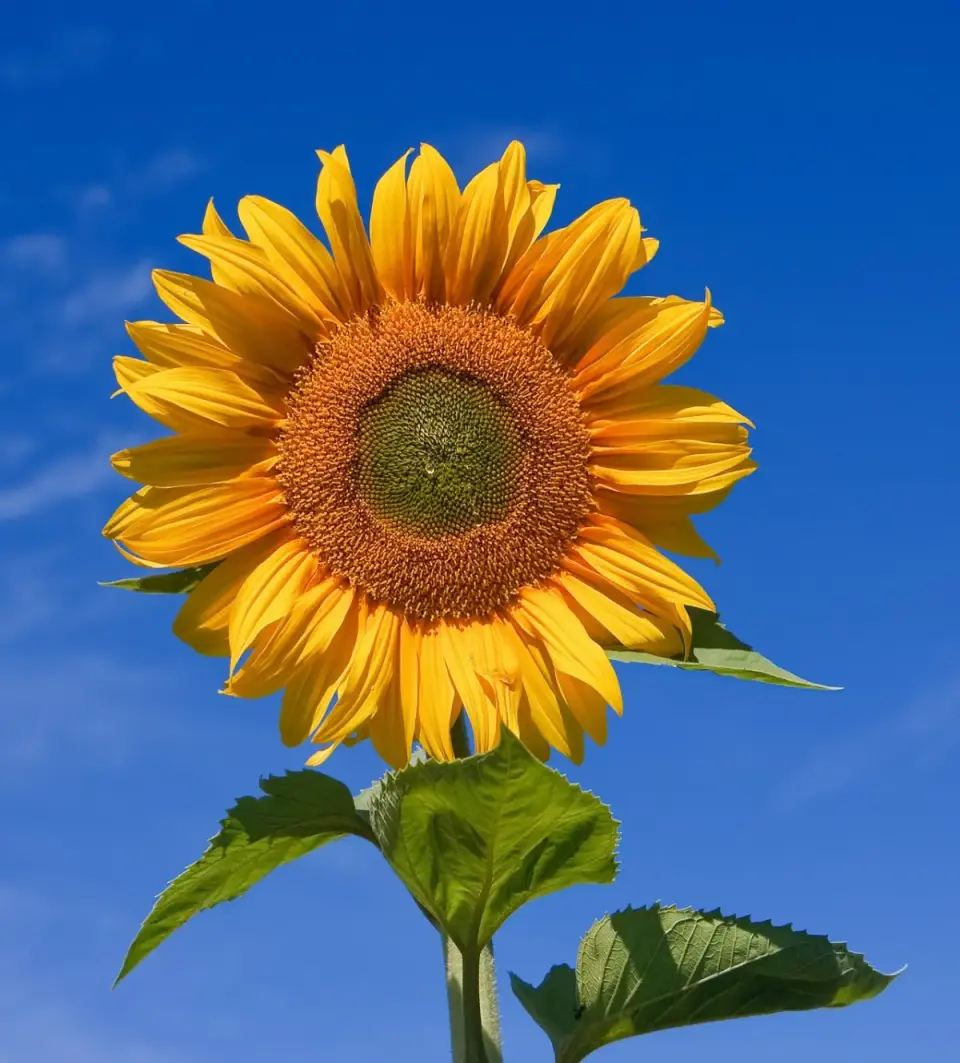
The sunflower is an annual plant of the daisy family, growing to 1–3 m, with a thick, roughly hairy stem and large heart-shaped leaves. Its inflorescence – a flower head up to 30–40 cm across – consists of yellow ray florets around the edge and hundreds of tiny disc florets in the centre, arranged in spirals that follow the Fibonacci sequence. Young flower heads turn to follow the sun, while mature ones usually face east. The plant comes from North America; edible oil is pressed from the seeds, and the press cake is valuable animal feed.
Significance in the country
The sunflower reached Russia in the 18th century as an ornamental, and industrial oil pressing was pioneered in the first half of the 19th century by the peasant Daniil Bokarev of Alekseyevka in Voronezh Governorate. Sunflower oil quickly caught on because the Orthodox Church allowed it during fasts, and roasted seeds – “semechki” – became the Russians’ favourite snack.
Where it grows
Grown on the black earth (chernozem) soils of the south and the Volga region: in the Saratov, Rostov, Voronezh, Volgograd, Samara and Orenburg oblasts, in Krasnodar and Stavropol krais, and further east in Altai Krai.
More: Wikipedia (en) Wikipedia (pl)