Mozambique · #1 palm
Coconut palm
Cocos nucifera · locally: coqueiro
Inhambane is the “land of coconut palms” – millions of them line the beaches, and their nuts give the milk that goes into every dish.
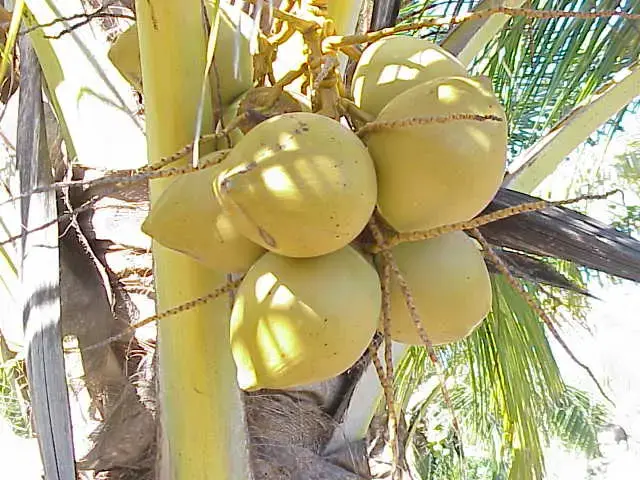
The coconut palm is a slender palm growing 20–30 m tall, with a slightly curved trunk and a crown of pinnate leaves several metres long. The fruits are large drupes with a fibrous husk and a hard shell enclosing white flesh and coconut water. The palm tolerates salt and sandy soils, so it thrives on tropical coasts. Almost every part of it is used: the flesh gives copra and oil, the leaves are used for thatching and weaving mats, the fibres for making rope, and the sap from the inflorescences is fermented into palm wine.
Significance in the country
Inhambane Province is famous for its endless coconut groves, and the plantations around Quelimane in Zambezia were once among the largest in the world. Coconut milk is a mainstay of Mozambican cooking – in seafood dishes and in dishes made with cassava leaves (matapa), among others.
Where it grows
The whole coast, most abundantly in Inhambane Province and around Quelimane in Zambezia; also on the beaches of Nampula, Cabo Delgado, Sofala, Gaza and Maputo.
More: Wikipedia (en) Wikipedia (pl)