India · #11 palm State tree of Kerala
Coconut palm
Cocos nucifera · locally: nariyal (नारियल)
The palm that, according to popular etymology, gave Kerala its name – its nut is broken for good luck during Hindu rituals.
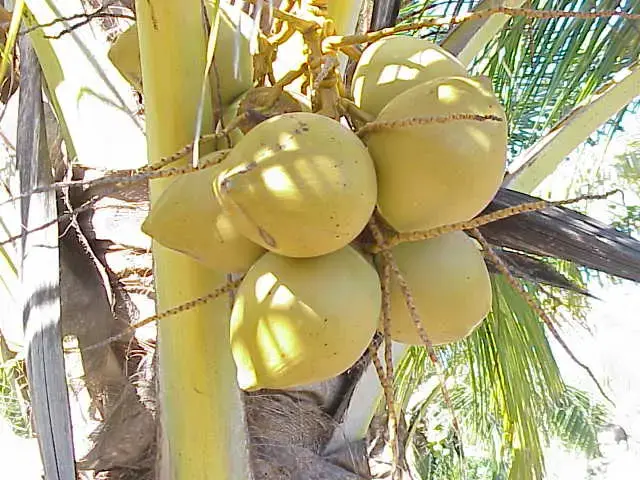
A slender palm growing 25–30 m tall, with a slightly curved, ringed trunk and a plume of pinnate leaves 4–6 m long. The fruit is a drupe with a thick, fibrous husk enclosing a hard shell, white flesh (copra) and refreshing coconut water. The palm grows best on sandy coasts in a hot, humid climate and bears fruit all year round. Almost every part of it is used: the flesh and milk in cooking, the oil for cooking and hair care, the coir fibre for ropes and mats, and the leaves for thatching.
Significance in the country
India is one of the world’s largest coconut producers, and the coconut palm is the state tree of Kerala, whose name is often derived from the Malayalam word “kera” – coconut. The coconut is one of the most important offerings in Hinduism: it is broken in front of temples, at the start of new ventures and at weddings.
Where it grows
The Malabar and Coromandel coasts – above all Kerala, Tamil Nadu, Karnataka and Andhra Pradesh – as well as Goa, the Konkan, Odisha, Bengal, Lakshadweep and the Andaman and Nicobar Islands.
More: Wikipedia (en) Wikipedia (pl)