Mozambique · #2 crop
Cashew
Anacardium occidentale · locally: cajueiro
In the 1970s Mozambique was the world’s largest producer of cashew nuts – today caju still shapes the landscape of the north.
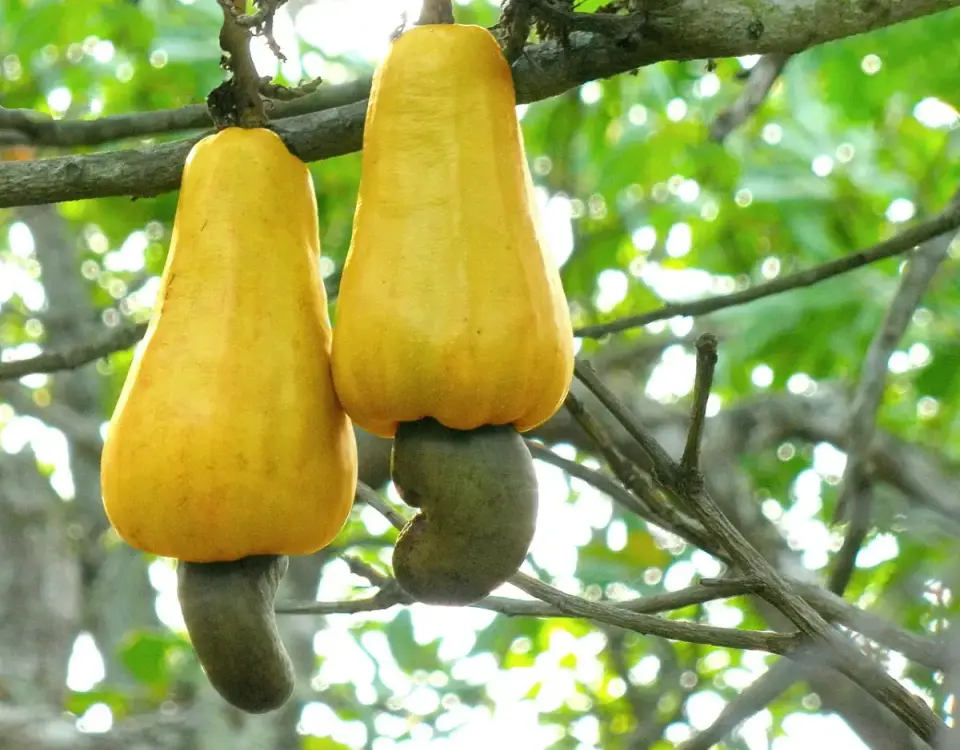
The cashew is a spreading evergreen tree growing 10–12 m tall, with leathery, oval leaves. Its fruit has two parts: a fleshy yellow or red “cashew apple” (the swollen stalk) and the kidney-shaped nut that hangs beneath it. The nutshell contains a caustic oil, so the nuts must be roasted and shelled before eating. The juicy cashew apple is eaten raw or fermented and distilled into strong spirits. The tree comes from Brazil and copes well with drought and poor, sandy soils.
Significance in the country
The Portuguese brought cashews to Mozambique in the 16th century, and in the 1970s the country led the world in their production. For hundreds of thousands of families in the north, especially in Nampula Province, selling the nuts is still one of their main sources of cash.
Where it grows
Sandy coastal lowlands – by far the most in Nampula Province, as well as in Cabo Delgado, Zambezia, Inhambane and Gaza.
More: Wikipedia (en) Wikipedia (pl)