Mozambique · #7 crop
Cassava
Manihot esculenta · locally: mandioca
Cassava is one of Mozambique’s key food plants – the roots give flour and porridge, the leaves the famous matapa with peanuts and coconut milk.
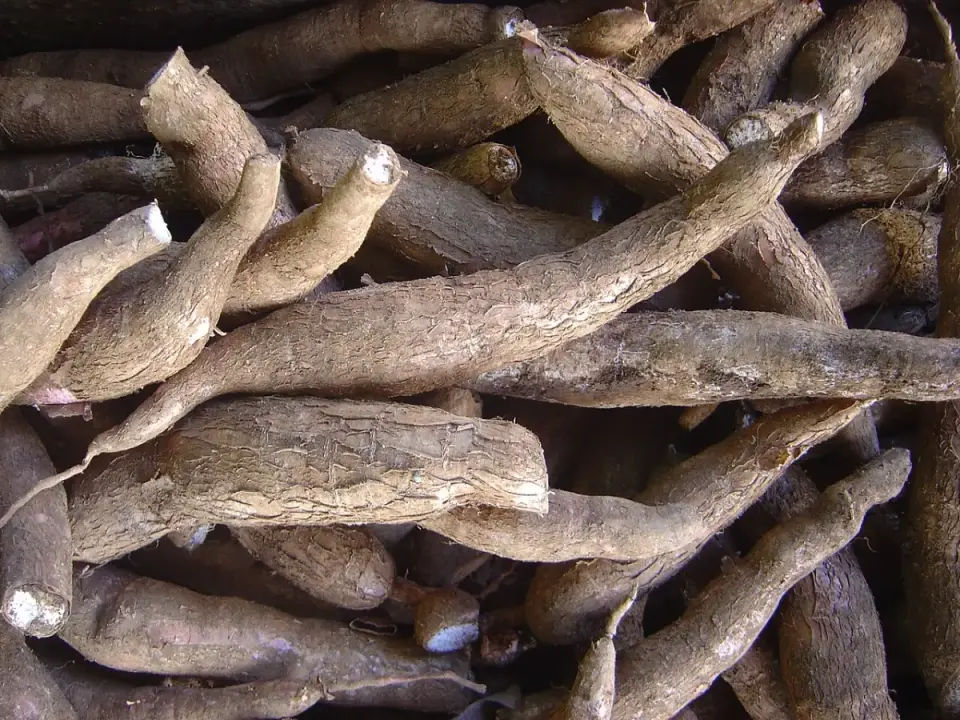
Cassava is a shrub of the spurge family growing 1–3 m tall, with palmately divided leaves and swollen, starchy storage roots. The raw roots and leaves contain cyanogenic glycosides, so they must be soaked, dried or cooked before eating. The plant comes from South America, is easily propagated from cuttings and copes well with drought and poor soils. The roots can be left in the ground for many months and dug up as needed.
Significance in the country
The Portuguese brought cassava to East Africa, and today it is a staple food, especially in the north of the country. The leaves, cooked with ground peanuts and coconut milk, make matapa – one of Mozambique’s most characteristic dishes – and the dried roots are made into flour for a thick porridge.
Where it grows
Grown throughout the country, most of all in the northern and central provinces – Nampula, Zambezia, Cabo Delgado and Niassa – and in Inhambane in the south.
More: Wikipedia (en) Wikipedia (pl)