Samoa · #2 palm Coconut palm on the national emblem (state seal) of Samoa
Coconut palm
Cocos nucifera · locally: niu
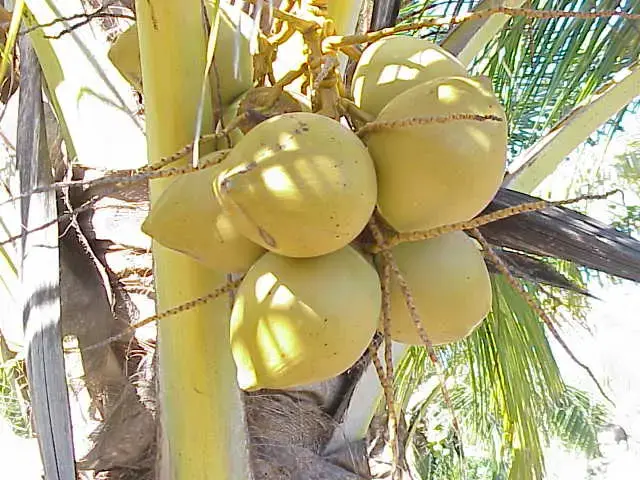
A coconut palm rises from the sea on Samoa’s emblem – it provides cream for palusami, oil for export and fibre for lashing traditional fale houses.
The coconut palm has a slender trunk up to 30 m long and a crown of pinnate leaves, and its fruits ripen all year round. The most important ingredient in Samoan cooking is the thick coconut cream squeezed from the grated flesh, which is poured over food baked in the umu earth oven. The husk fibres are twisted into strong ’afa cord, used to lash together the frames of fale houses without nails, and the leaves are woven into baskets and blinds. Dried flesh, known as copra, and coconut oil have been among the country’s main exports since colonial times.
Significance in the country
A coconut palm rising from the waves appears on the state seal of Samoa, symbolising how the islanders’ lives depend on this plant. Samoa’s national dish, palusami, consists of taro leaves wrapped around coconut cream and baked in the umu.
Where it grows
On the coasts and lowlands throughout the country; extensive former plantations stretch along the north coast of Upolu and on Savai’i.
More: Wikipedia (en) Wikipedia (pl)