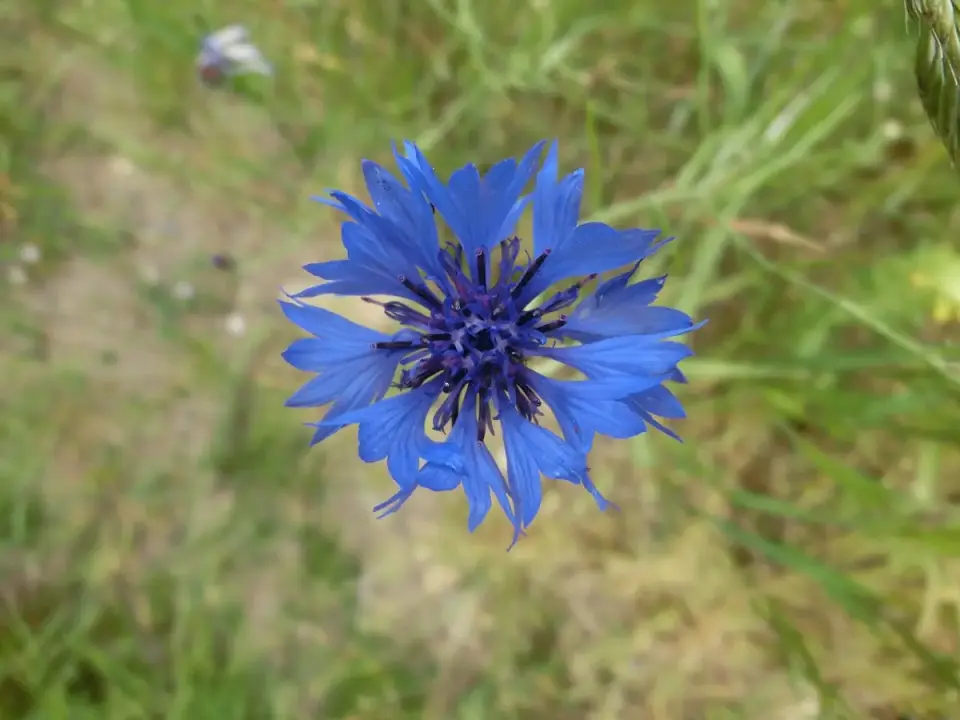
Cornflower (Centaurea cyanus)
Photo: Orikrin1998, CC BY 3.0, Wikimedia Commons

On the map in 4 countries flower symbol: Belarus, Estonia, Germany

Cornflower

Centaurea cyanus

Family: Asteraceae

On our map this plant appears in 4 countries and ranks highest in: Estonia, Belarus, Germany, Poland.

The cornflower is an annual of the daisy family with slender, branching stems, narrow grey-green leaves and intensely blue flower heads. The outer florets are large and funnel-shaped, the central ones small and darker. For thousands of years it accompanied cereal crops, especially rye, growing in fields, on field margins and by the roadside. Cornflower petals were used to dye fabrics and to add to herbal teas, and the plant itself is a valuable honey plant.

Description from: Estonia.

More: Wikipedia (en) Wikipedia (pl) Plants of the World Online (Kew)

Significance in each country

  1. Estonia no. 1 of 8 cultivated

    National flower of Estonia

    The cornflower was recognised as Estonia’s national flower in 1968, and its blue is associated with the colours of the national flag. Estonians call it the “rye flower” (rukkilill) – a symbol of rural life and daily bread.

  2. Belarus no. 2 of 8 introduced or naturalised

    Regarded as one of the floral symbols of Belarus

    In Belarusian folk tradition the valoshka is an inseparable part of the rye-field landscape – woven into harvest and Kupala Night wreaths, it appears in songs and embroidery as a symbol of the native land and of purity.

  3. Germany no. 2 of 10 introduced or naturalised

    Unofficial national flower of Germany

    According to legend, Queen Louise of Prussia, fleeing Napoleon’s troops, hid her children in a cornfield and wove them garlands of cornflowers; her son, later Emperor William I, made the cornflower his favourite flower.

  4. Poland no. 9 of 15 introduced or naturalised

    The cornflower was one of the most typical flowers of the Polish countryside – it decorated wreaths, harvest-festival crowns and the bouquets blessed on 15 August. Its Polish name, bławatek, comes from the old word “bławy”, meaning blue.