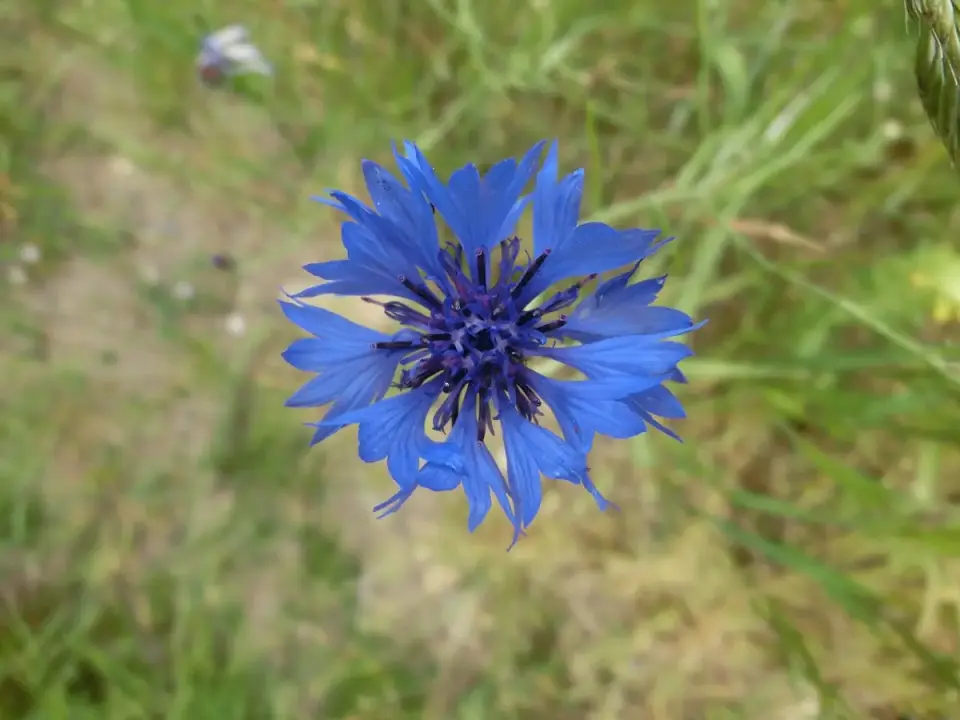
Germany · #2 flower Unofficial national flower of Germany
Cornflower
Centaurea cyanus · locally: Kornblume
The blue flower of the cornfields, Emperor William I’s favourite flower and a romantic symbol of Prussia.
The cornflower is an annual of the daisy family with narrow, grey-green leaves and intensely blue flower heads. The outer florets are funnel-shaped and enlarged, giving the flower head a ragged look. For thousands of years it accompanied cereal crops – it grew in fields of rye and wheat, and its petals were used for dyeing and as an ingredient in teas. With the cleaning of seed grain and the use of herbicides it became rare; today it is returning thanks to wildflower strips along field margins.
Significance in the country
According to legend, Queen Louise of Prussia, fleeing Napoleon’s troops, hid her children in a cornfield and wove them garlands of cornflowers; her son, later Emperor William I, made the cornflower his favourite flower. From then on the “Kornblume” became a symbol of Prussia, and later of all Germany.
Where it grows
Throughout the country in cereal fields, on fallow land and along roadsides; most common in areas of extensive farming on the sandy soils of Brandenburg, Mecklenburg and Lower Saxony.
More: Wikipedia (en) Wikipedia (pl)