Uruguay · #8 grass
Pampas grass
Cortaderia selloana · locally: cortadera
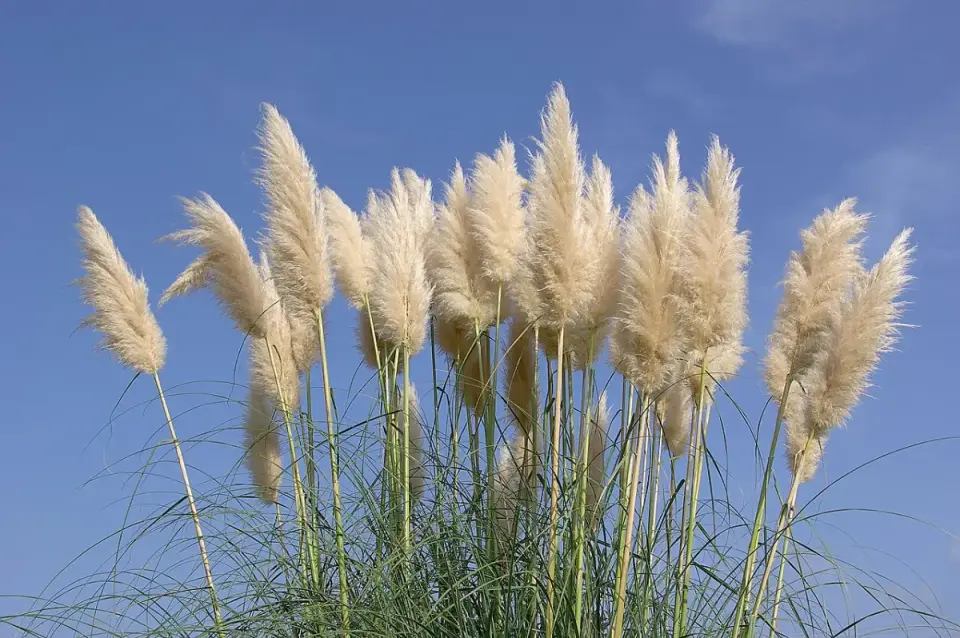
The silvery plumes of pampas grass, a familiar garden plant, are a native feature of Uruguay’s wetland landscapes.
Pampas grass is a robust perennial grass forming dense clumps of leaves up to 2 m long with sharp, cutting edges – hence its Spanish name, cortadera. In late summer stiff stems 2–3 m tall rise from the clumps, topped with fluffy, silvery-white or pinkish panicles. It is dioecious: female plants bear the showier, fluffier plumes. The species is grown worldwide as an ornamental, and in many places, including Spain, New Zealand and California, it has become a troublesome invasive species.
Significance in the country
In Uruguay pampas grass is a native plant of wetlands, lagoon shores and roadside ditches, and its white plumes are a typical sight in the country’s autumn landscape. From South America, including the Río de la Plata region, it reached European gardens in the 19th century as pampas grass.
Where it grows
Throughout the country – on damp grasslands and the banks of rivers, lagoons and ditches, most abundantly in the eastern lowlands around Laguna Merín and Laguna de Rocha and in river valleys.
More: Wikipedia (en)