Sudan · #6 crop
Sorghum
Sorghum bicolor · locally: dura (ذرة)
Sorghum, known in Sudan as dura, is the country’s staple grain – its flour is used to bake thin kisra flatbreads.
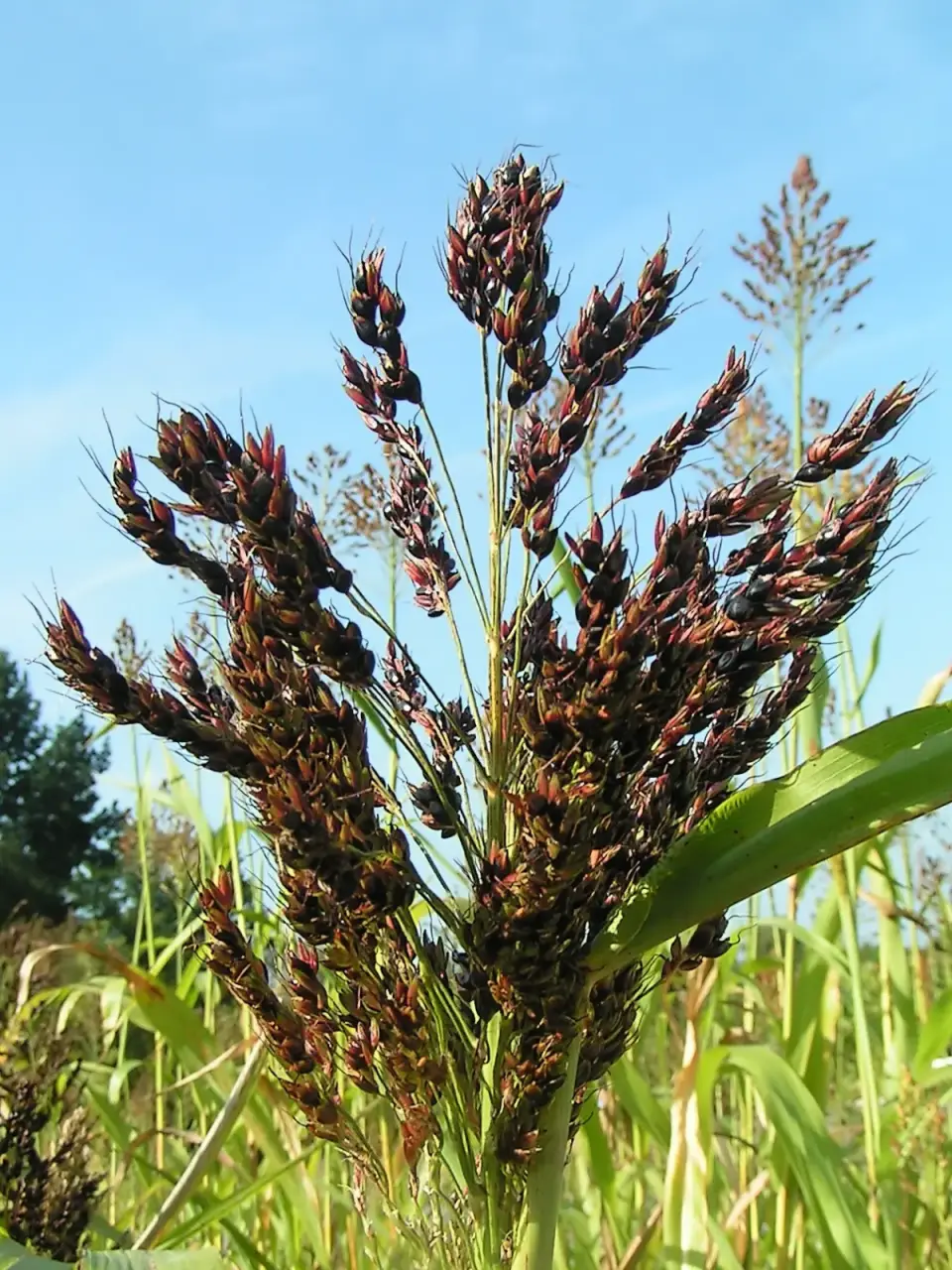
An annual grass growing to 1–4 m, with thick, solid stems, broad leaves and compact or loose panicles of round grains – white, red or brown. It was domesticated in Africa, on the eastern edge of the Sahel, several thousand years ago. It tolerates heat and drought better than maize, which makes it one of the most important cereals of the dry tropics. The grain is ground into flour and meal and brewed into beer, while the stalks are used as fodder and as material for fences and roofs.
Significance in the country
Sudan is one of Africa’s largest sorghum producers, and dura is the staple food of most of the population – kisra is baked from fermented batter, and the flour is cooked into a thick porridge, asida. The oldest known traces of domesticated sorghum, about 5,000 years old, were discovered in the east of the country, in the Kassala area.
Where it grows
In vast rain-fed fields in Gedaref – Sudan’s “sorghum granary” – and in Gezira, Sennar, Blue Nile and White Nile, Kordofan and Darfur.
More: Wikipedia (en) Wikipedia (pl)