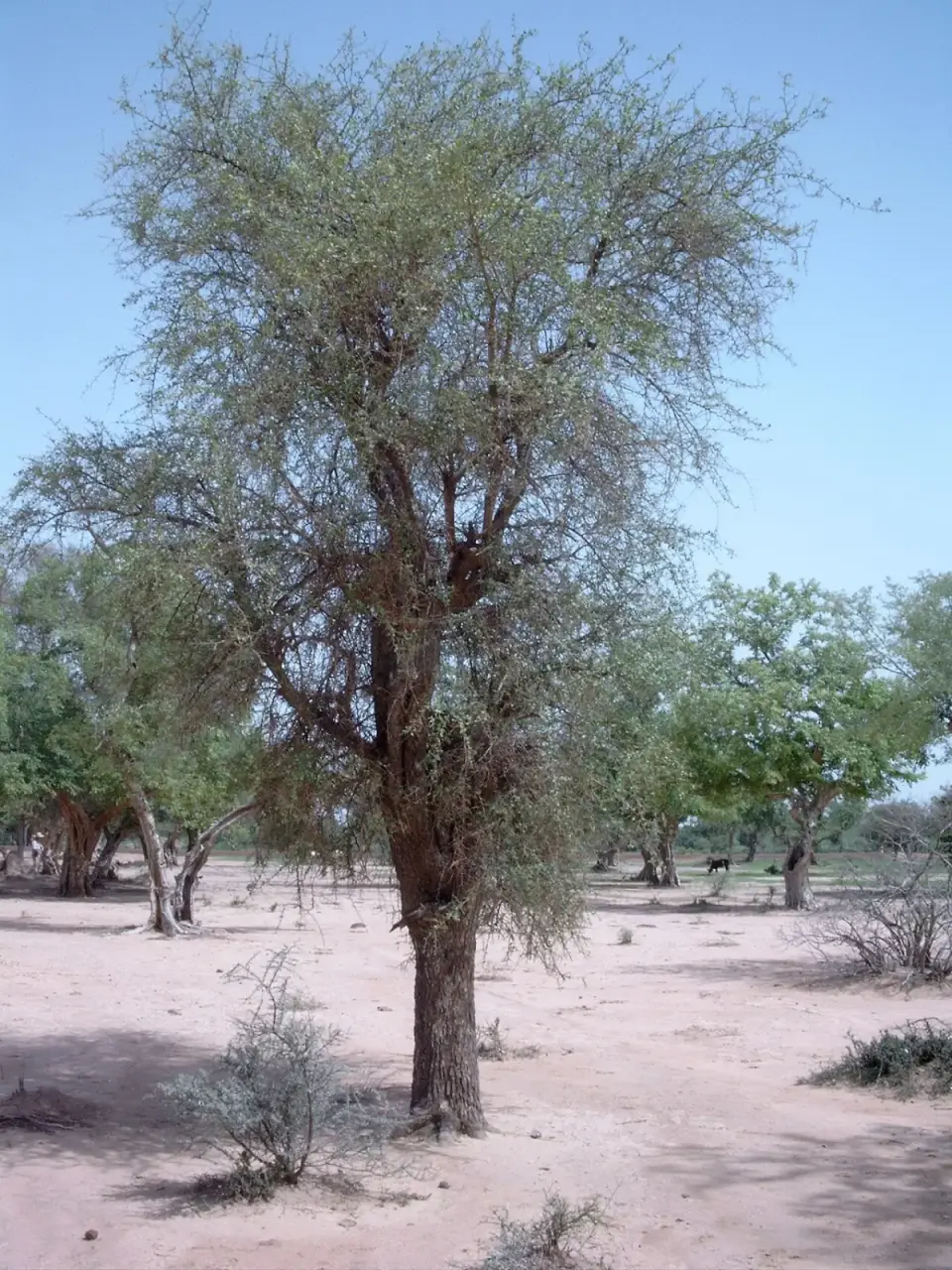
Sudan · #5 tree
Desert date
Balanites aegyptiaca · locally: hidżlidż (هجليج)
The thorny heglig (hijlij) grows all over Sudan – its fruits, known as desert dates, have saved herders in times of famine for centuries.
A spiny, evergreen shrub or tree up to 10 m tall, with long green thorns and paired, leathery leaflets. It produces yellow, oblong drupes with a bittersweet, sticky pulp, known as desert dates. It is extremely drought-resistant and grows on a wide variety of soils – from sands to floodplain clays. Oil is pressed from the seeds, the fruits contain saponins once used for washing clothes, and the hard wood is used for tools and firewood.
Significance in the country
The heglig is one of Sudan’s commonest trees and an important source of food in times of drought. It gave its name to Heglig – a town and oilfield on the border with South Sudan.
Where it grows
On the savannas and in the wadis of central and southern Sudan – from Darfur and Kordofan to Kassala and Gedaref; in the dry north only in the valleys of seasonal rivers.
More: Wikipedia (en) Wikipedia (pl)