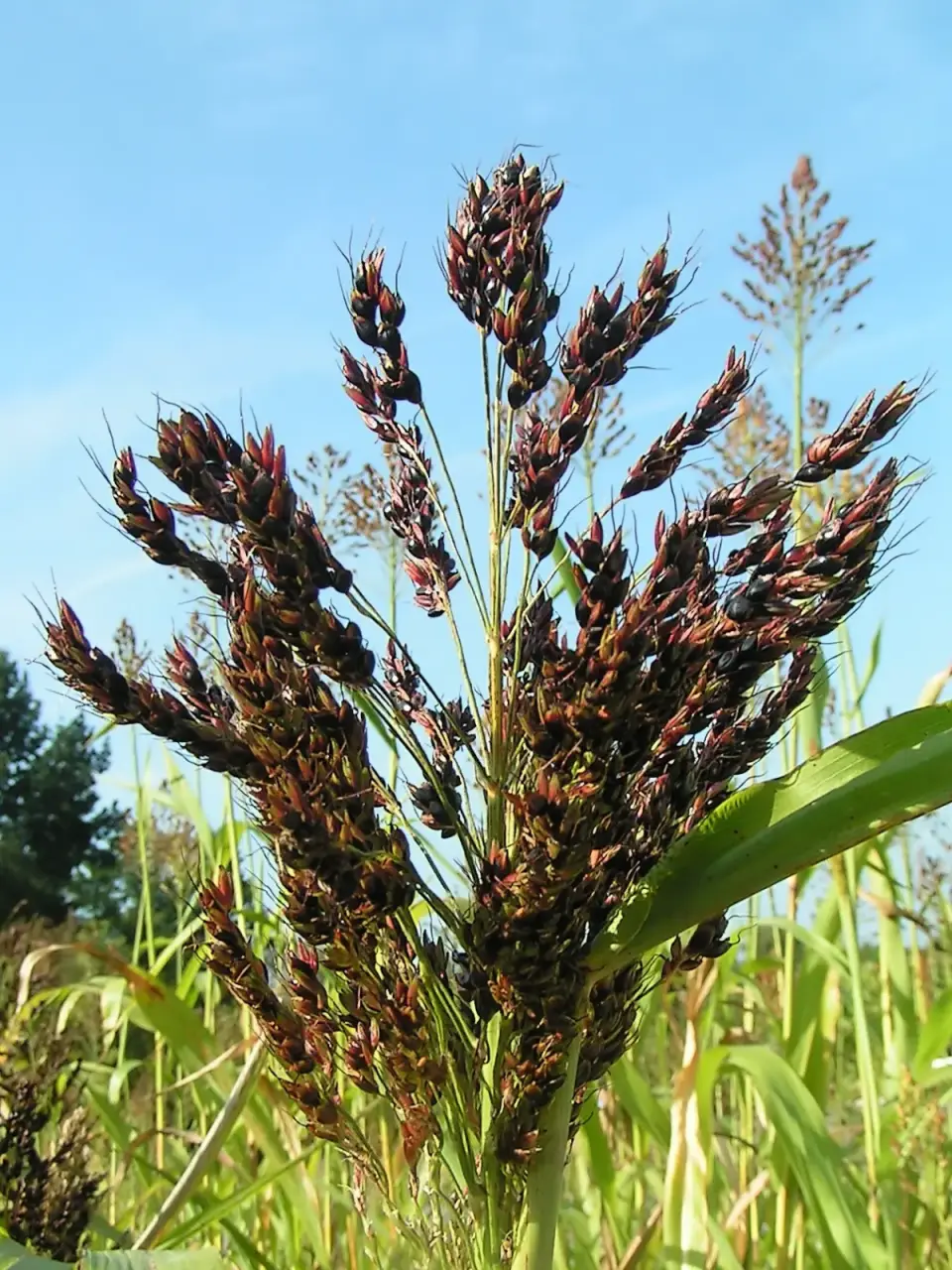
Somalia · #5 crop
Sorghum
Sorghum bicolor · locally: masago
A drought-hardy cereal that feeds the farmers between the Juba and the Shabelle – the Bay region is Somalia’s “sorghum granary”.
An annual cereal grass native to Africa, growing to 1.5–4 m, with dense panicles of small grains that are white, yellow, red or brown. It is one of the world’s most drought- and heat-tolerant cereals: during dry spells it can stop growing and revive after rain. The grain is ground into flour for flatbreads and porridge, and the stems are used as animal fodder and building material.
Significance in the country
Sorghum is the staple cereal of farmers in the Bay and Bakool regions, home to the Rahanweyn clans; grown without irrigation and dependent on the rains, it decides whether famine threatens in a given year.
Where it grows
The farming land between the Juba and the Shabelle – above all the Bay region (around Baidoa) and Bakool, as well as Lower and Middle Shabelle, Hiran, Gedo and Middle Juba.
More: Wikipedia (en) Wikipedia (pl)