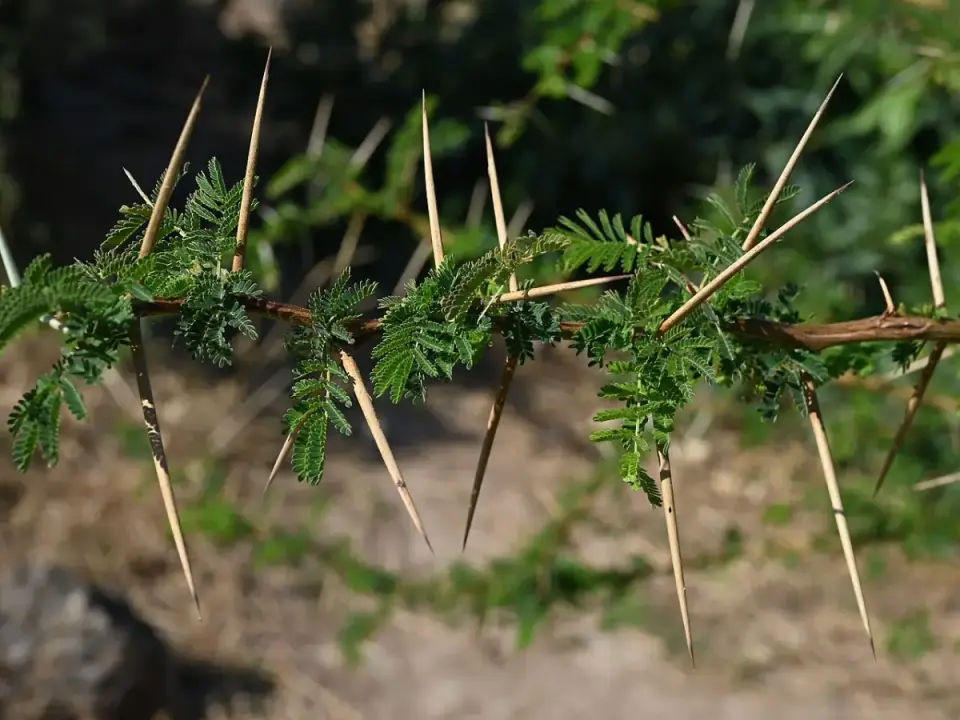
Sudan · #1 tree
Gum arabic tree
Senegalia senegal · locally: haszab (هشاب)
Sudan supplies most of the world’s gum arabic – the resin that oozes from the cut bark of the gum arabic tree.
A small, thorny tree or shrub 2–6 m tall, with grey bark, pinnate leaflets and spikes of creamy-white flowers. It grows on the dry, sandy soils of savannas receiving around 300–600 mm of rain a year. In the dry season a thick resin seeps from cuts in the bark and hardens into amber lumps – this is gum arabic, used as an emulsifier and stabiliser in soft drinks, sweets, medicines and paints. The tree fixes nitrogen from the air, improving soil fertility, so it is included in crop rotations.
Significance in the country
The so-called gum belt stretches across Kordofan and Darfur as far as the Blue Nile, and gum collection provides an income for millions of farmers and herders. Gum arabic was so important to Sudan that it was even exempted from American sanctions against the country.
Where it grows
In the “gum belt” of central Sudan – mainly in North and South Kordofan, Darfur, White Nile, Sennar, Blue Nile and Gedaref.
More: Wikipedia (en) Wikipedia (pl)