Samoa · #5 tree
Mamala tree
Homalanthus nutans · locally: mamala
From the bark of the mamala tree, used by Samoan healers, scientists isolated prostratin – a promising compound in HIV research.
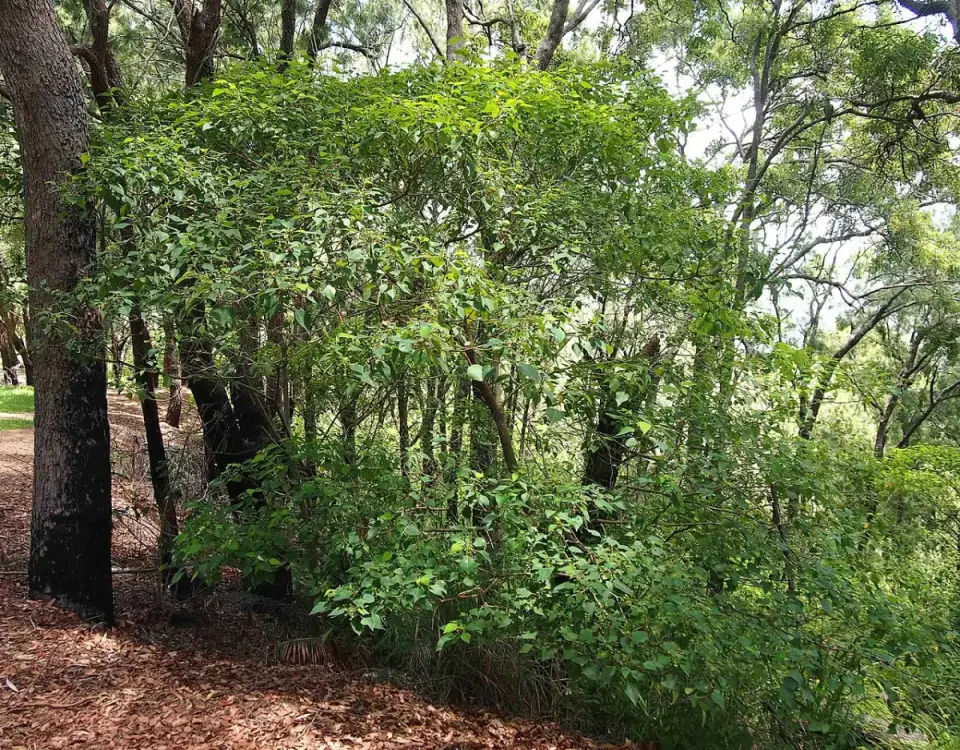
The mamala is a small, fast-growing tree of the spurge family, with heart-shaped, long-stalked leaves that turn bright red before they fall. It exudes a milky sap and grows at forest edges, in gaps left by windthrow and on abandoned fields. Samoan healers prepare a decoction of its bark used for jaundice and hepatitis. The species also occurs in Australia, where it is known as bleeding heart.
Significance in the country
In the 1980s the ethnobotanist Paul Alan Cox, studying Samoan folk medicine, helped bring about the discovery in mamala bark of prostratin, which shows anti-HIV activity in the laboratory. Samoa negotiated a share of any profits from a resulting drug, and the story has become a model of fair use of traditional knowledge.
Where it grows
In lowland and foothill secondary forests and along their edges on Upolu and Savai’i, including the Falealupo rainforest in the west of Savai’i.
More: Wikipedia (en)