Samoa · #3 crop
Taro
Colocasia esculenta · locally: talo
Talo is the foundation of the Samoan table – in 1993 leaf blight wiped out the crops and all exports, and it took years to rebuild with resistant varieties.
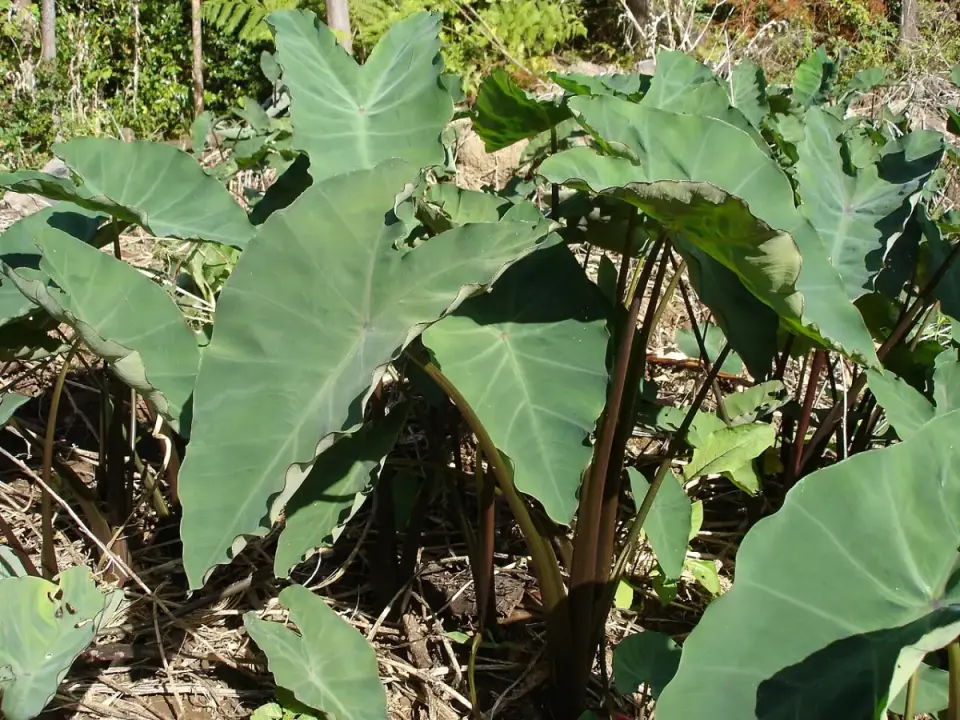
Taro is a perennial with large, peltate, arrow- to heart-shaped leaves on long stalks, growing from a fleshy, starchy corm. The corms are boiled or baked, because raw they contain irritating calcium oxalate crystals. The leaves, called lu’au, are also edible after long cooking. The plant is propagated from the tops of the corms with a piece of the leaf stalks attached, which are replanted straight after harvest.
Significance in the country
In 1993 taro leaf blight, caused by the water mould Phytophthora colocasiae, destroyed the crops in Samoa and wrecked the lucrative export of corms to New Zealand. Thanks to breeding programmes for resistant varieties, talo is once again on tables and in markets, and remains a symbol of Samoan cuisine and hospitality.
Where it grows
Grown in village gardens all over Upolu and Savai’i, especially on the fertile slopes inland.
More: Wikipedia (en) Wikipedia (pl)