Denmark · #6 crop
Rye
Secale cereale · locally: rug
Dark, dense rugbrød rye bread is a staple of the Danish diet and the base of smørrebrød – open sandwiches eaten for lunch.
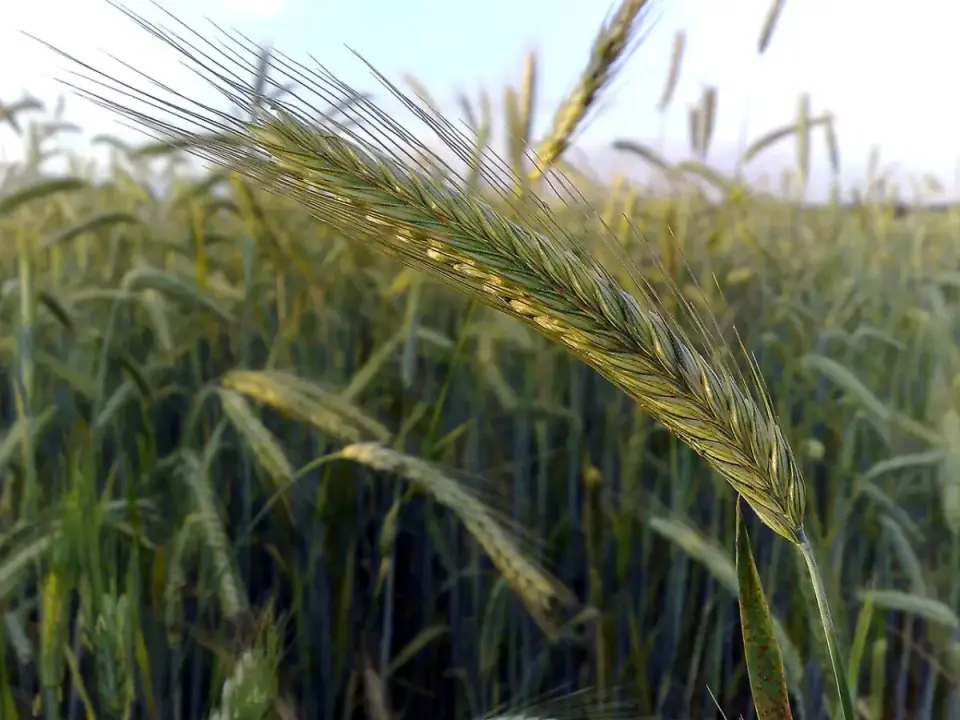
Rye is an annual or biennial grass of the grass family, growing to 1.5–2 m, with long, awned ears. Unlike wheat, it is cross-pollinated – its flowers are fertilised by wind-borne pollen from other plants. It is the most frost-hardy of the cereals and yields well on poor, acidic and sandy soils. Its flour contains little dough-forming gluten, so rye bread is usually baked with sourdough; the grain can be infected by poisonous ergot.
Significance in the country
Danes eat rugbrød, a dark sourdough bread made from rye flour and whole grains, every day, and smørrebrød – slices of rugbrød topped with herring, pâté, egg or prawns – is a symbol of Danish cuisine. For centuries rye was the main cereal on the sandy soils of Jutland.
Where it grows
Grown throughout the country, most often on the light, sandy soils of central and western Jutland; on the more fertile clays of the islands, wheat and barley dominate.
More: Wikipedia (en) Wikipedia (pl)