Angola · #6 crop
Cassava
Manihot esculenta · locally: mandioca
Cassava flour is cooked into funje – a thick porridge that accompanies almost every meal in Angola.
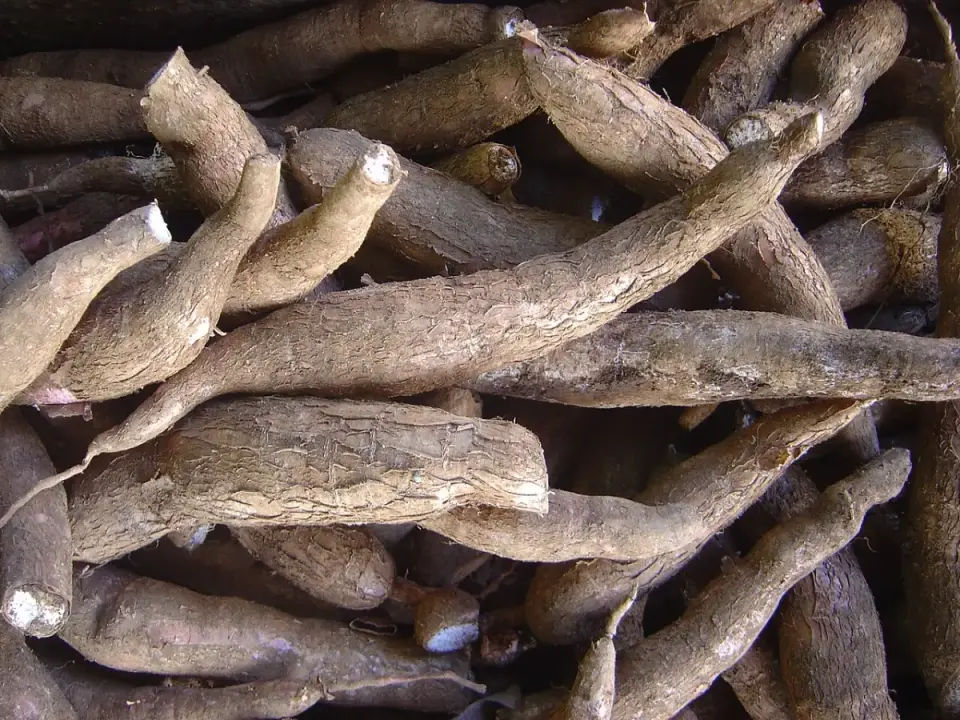
Cassava is a shrubby plant of the spurge family, growing to 2–3 m, with palmately divided leaves and thick, starchy tuberous roots. It originates from South America and was brought to Africa by the Portuguese, probably via the very coasts of the Congo and Angola. The raw tubers contain compounds that release hydrogen cyanide, so before eating they are soaked, fermented and dried. The plant copes well with drought and poor soils, and the tubers can wait in the ground for a long time before being harvested.
Significance in the country
Angola is one of Africa’s largest cassava producers. Funje made from cassava flour is the staple of cooking in the north of the country, and the young leaves are used to make the popular dish kizaca.
Where it grows
Grown mainly in the north and the interior – most of all in Malanje and Uíge provinces, as well as in Cuanza Norte and Cuanza Sul, Zaire, Bengo, Lunda Norte and Lunda Sul, Moxico and Bié.
More: Wikipedia (en) Wikipedia (pl)