Brazil · #8 tree
Cashew
Anacardium occidentale · locally: caju (cajueiro)
A tree from Brazil’s north-eastern coast that gave the world cashew nuts and Brazilians the juicy caju “apple”.
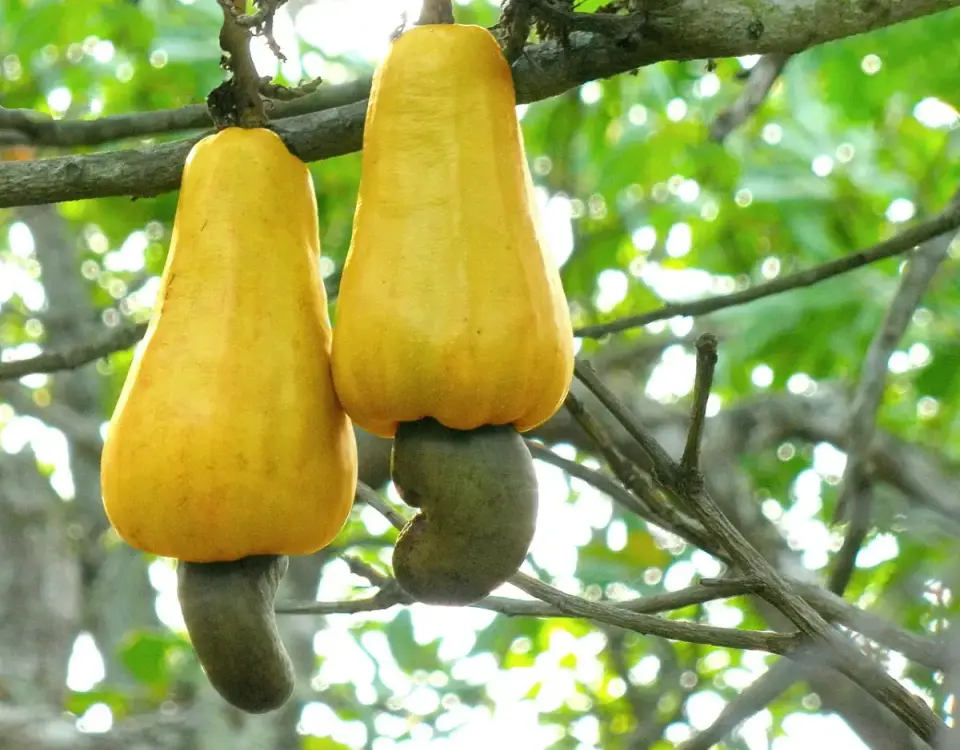
The cashew is an evergreen tree of the cashew family, usually growing to 5–14 m, with a broad, low-set crown and leathery leaves. Its true fruit is a kidney-shaped nut hanging beneath a fleshy yellow or red “apple”, which develops from the swollen stalk. The nutshell contains a caustic oil, so cashews are roasted and shelled before sale. The juicy, astringent false fruit is edible but spoils quickly, so it is rarely exported. In the 16th century the Portuguese took the cashew to India and Africa, where most of the nuts are now harvested.
Significance in the country
In Brazil caju fruits are made into juices, sweets and the clarified drink cajuína, whose traditional production in Piauí has been listed as part of the country’s intangible cultural heritage. In Parnamirim near Natal grows the Cajueiro de Pirangi – considered the world’s largest cashew tree, with a crown covering more than 8,000 m².
Where it grows
On sandy coasts and inland in the north-east – most of all in Ceará, Rio Grande do Norte and Piauí, and also from Maranhão to Bahia.
More: Wikipedia (en) Wikipedia (pl)