Madagascar · #7 crop cultivated
Rice
Oryza sativa · locally: vary
Family: Poaceae
For the Malagasy, rice is more than food – it is eaten up to three times a day, and terraced paddies adorn the entire central plateau.
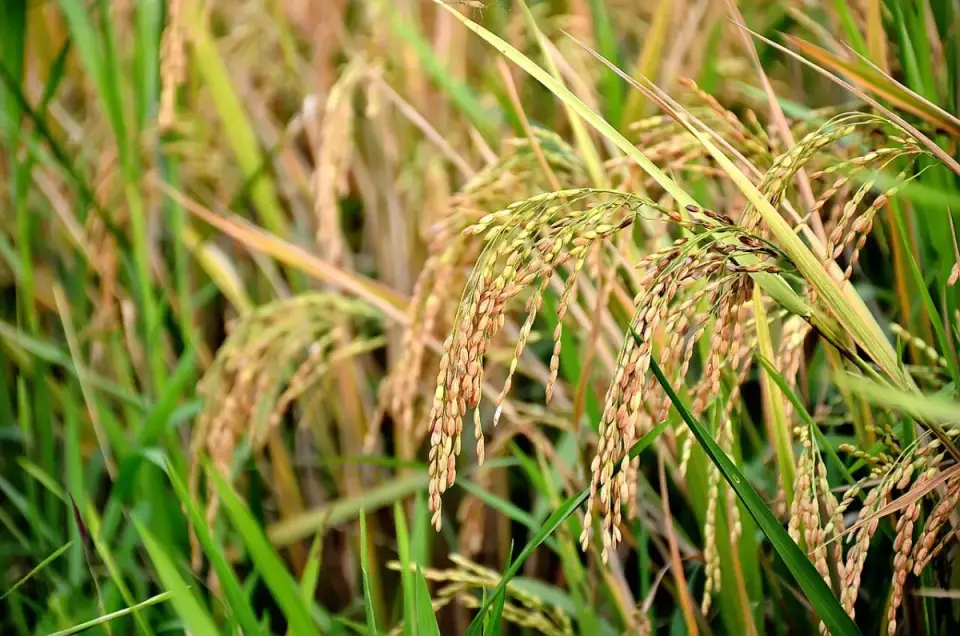
Rice is an annual grass growing to about 1–1.5 m, with hollow stems, long leaves and drooping panicles that develop into grains enclosed in husks. In Madagascar it is grown mainly in flooded fields in valleys and on terraces, but also on burnt hillsides in a system known as tavy. Seedlings from nursery beds are transplanted by hand, and after the harvest the grain is threshed by beating sheaves against stones and husked in wooden mortars.
Significance in the country
The Malagasy are among the world’s biggest rice eaters – the average person consumes more than 100 kg a year, usually with accompaniments called laoka. Rice growing, brought to the island partly by the Austronesian ancestors of the Malagasy, has shaped the landscape of the plateau, and rice fields surround almost every village.
Where it grows
Grown in almost the whole country; the most important “rice granary” is the plain around Lake Alaotra (Alaotra-Mangoro region), and picturesque terraced fields stretch across the central plateau – in Vakinankaratra, Analamanga and the Betsileo country.
A cultivated plant – not native here; according to the World Checklist of Vascular Plants (Kew) it has also become naturalised in places. Source and licence
More: Wikipedia (en) Wikipedia (pl) Plants of the World Online (Kew)