Vietnam · #6 crop
Rice
Oryza sativa · locally: lúa (cây lúa)
Vietnam is one of the world’s largest rice exporters – and rice is made into everything here, from phở noodles to rice paper.
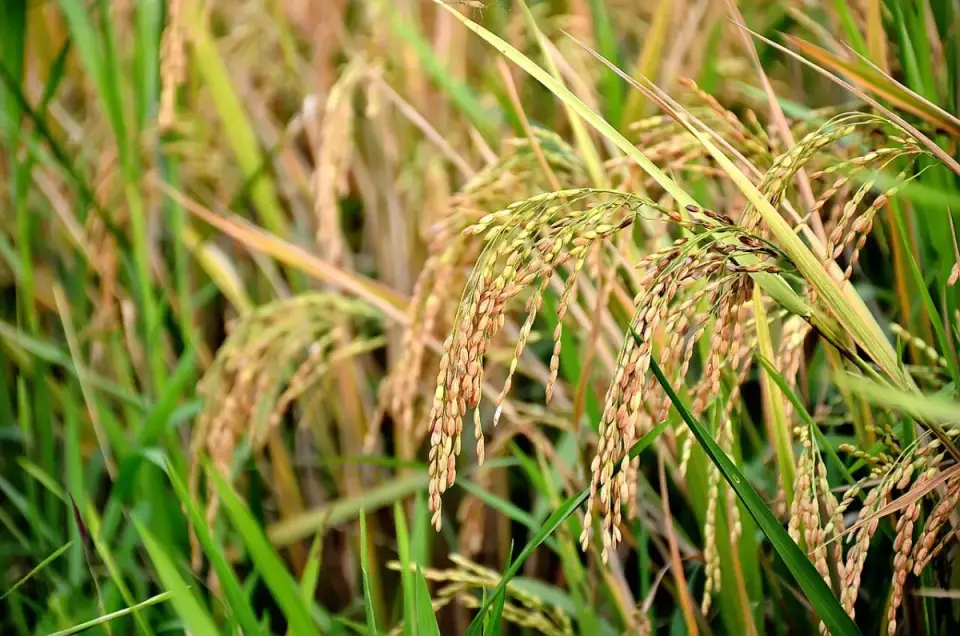
An annual grass growing to 1–1.5 m, with flat, narrow leaves and drooping panicles made up of spikelets, each of which yields one grain. Rice is grown in flooded fields – seedlings raised in a nursery bed are transplanted by hand or by machine, and the water keeps weeds in check. In the warm climate of the Mekong Delta two or even three crops a year are usually harvested. Alongside ordinary varieties, the Vietnamese grow glutinous rice (gạo nếp) and fragrant varieties such as ST25 from Sóc Trăng province.
Significance in the country
Rice growing has shaped the Vietnamese countryside, calendar and cuisine – rice is made into noodles for phở and bún, rice paper and rượu rice liquor, while glutinous rice goes into bánh chưng, cakes wrapped in leaves for Tết. The Mekong Delta produces more than half the national harvest, and the rice terraces of Mù Cang Chải in Yên Bái are among the most photographed landscapes in the country.
Where it grows
Throughout the country – the largest growing areas are in the Mekong Delta (An Giang, Kiên Giang, Đồng Tháp, Long An) and the Red River Delta, while in the northern mountains rice is grown on terraces, including at Mù Cang Chải (Yên Bái) and Hoàng Su Phì (Hà Giang).
More: Wikipedia (en) Wikipedia (pl)