India · #3 tree National fruit of India native
Mango
Mangifera indica · locally: aam (आम)
Family: Anacardiaceae
India produces nearly half the world’s mango harvest and grows more than a thousand varieties – from Alphonso to Dasheri.
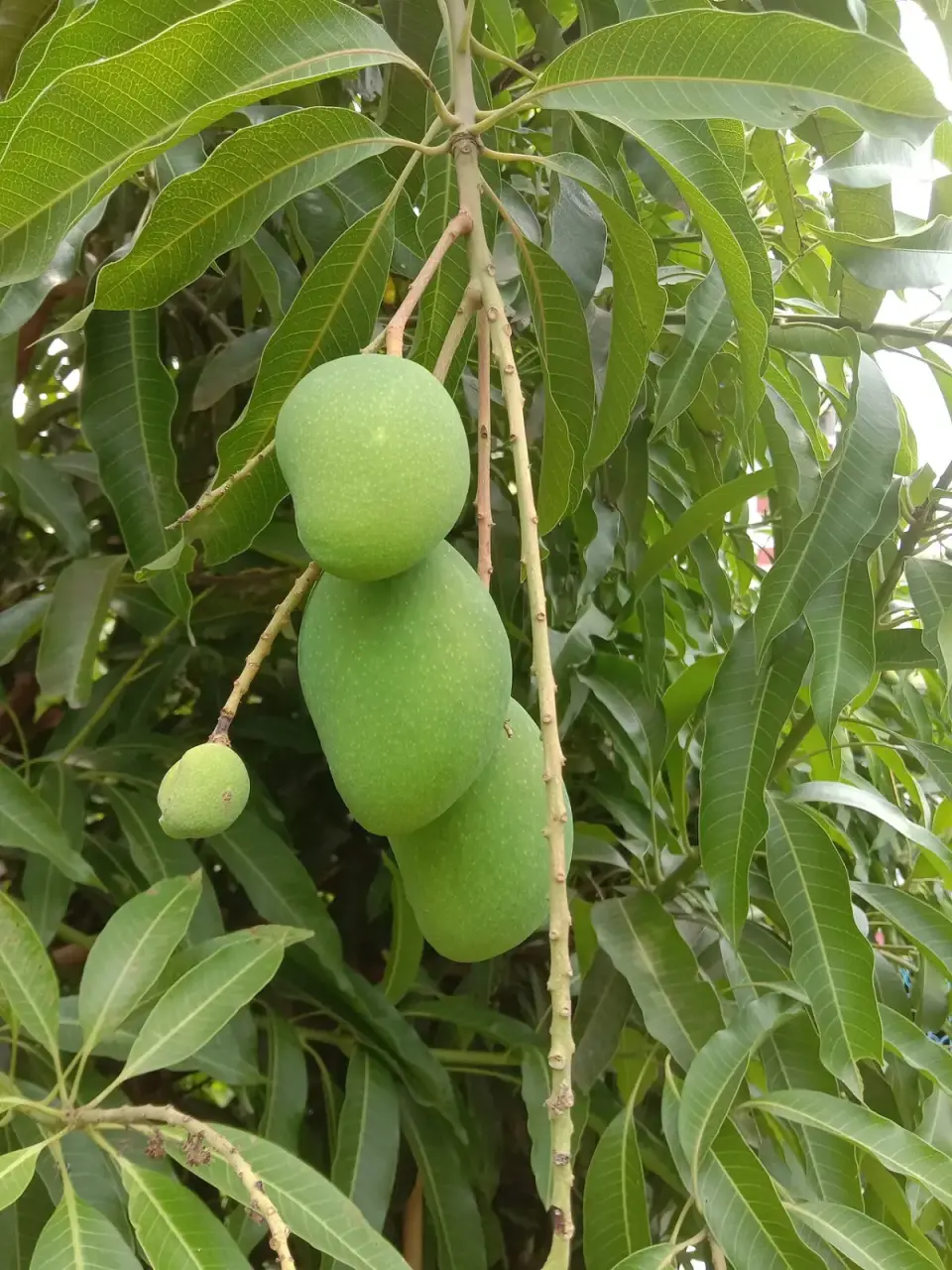
An evergreen tree with a dense, domed crown, growing up to 30 m tall and living for as long as several hundred years. Its lance-shaped, leathery leaves are coppery red when young, and its small flowers form large panicles. The fruit is a juicy drupe with yellow or orange flesh, eaten raw, in juices and in lassi, and when unripe in spicy pickles and chutneys. The species comes from the borderlands of India, Bangladesh and Myanmar, from where it spread throughout the tropics.
Significance in the country
The mango is the national fruit of India, the world’s largest producer; it is hailed as the “king of fruits”, and regional varieties such as Alphonso from Maharashtra, Kesar from Gujarat and Langra from Varanasi are a source of local pride.
Where it grows
Grown across almost the whole country except the high mountains; the largest orchards are in Uttar Pradesh, Andhra Pradesh, Karnataka, Bihar, Gujarat and Maharashtra.
According to the World Checklist of Vascular Plants (Kew), the species is native to this country. Source and licence
More: Wikipedia (en) Wikipedia (pl) Plants of the World Online (Kew)