Philippines · #7 tree Unofficial national fruit of the Philippines
Mango
Mangifera indica · locally: mangga
The Philippine Carabao variety is said to be one of the sweetest mangoes in the world, and dried mango from Cebu is a favourite souvenir.
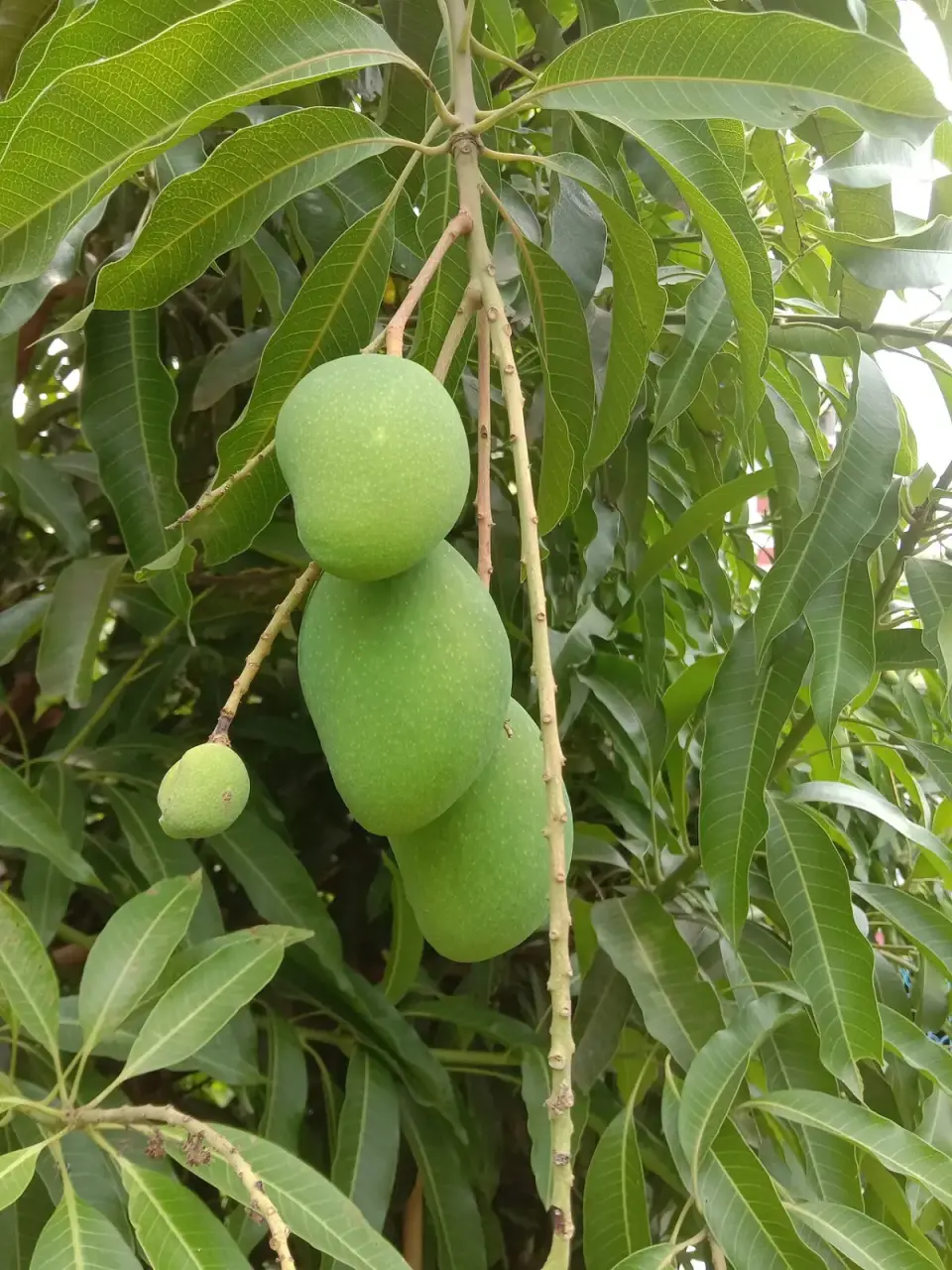
A long-lived evergreen tree growing to 30 m, with a dense, domed crown and lance-shaped, leathery leaves that are coppery red when young. Its small flowers are gathered in large panicles, and the fruit is a juicy drupe. The most important Philippine variety is Carabao (also called “Manila mango”), with elongated, golden-yellow fruits and smooth, almost fibreless, very sweet flesh. Unripe green mangoes are eaten with salt or with bagoong, a fermented shrimp paste.
Significance in the country
Mango is one of the most important fruits of the Philippines, exported fresh and dried. In the 1970s the Filipino scientist Ramon Barba developed a method of inducing trees to flower by spraying them with potassium nitrate, which allows mangoes to be harvested all year round; the island of Guimaras is famous for the best fruit and its annual Manggahan Festival.
Where it grows
Grown in the lowlands across almost the whole country; the largest orchards are in the Ilocos Region (Pangasinan), Central Luzon (Zambales), on Guimaras and Cebu, and in the Davao Region of Mindanao.
More: Wikipedia (en) Wikipedia (pl)