15 plants worth knowing
India
India is one of the world’s most botanically rich countries – about 18,000 species of flowering plants grow here, and its territory includes parts of four global biodiversity “hotspots”. The landscape ranges from the humid forests of the Western Ghats and the north-east, through monsoon forests of sal and teak and the dry savannas of the Deccan, to the Thar Desert and the Himalayan conifer forests with their alpine meadows.
Hover over a plant to see on the map where it grows.
where it grows
-
 1
Sacred lotus
Nelumbo nucifera
The lotus rises out of the mud, yet its flowers and leaves stay spotlessly clean – in India it is an age-old symbol of purity and enlightenment.
-
 2
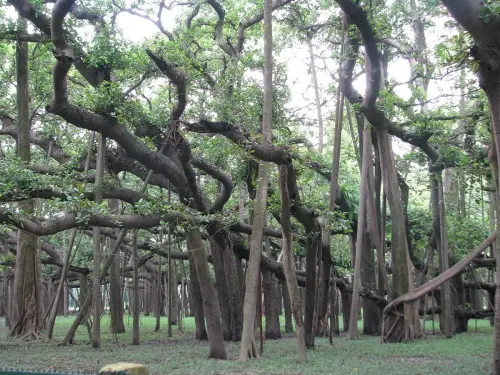
Banyan
Ficus benghalensis
A banyan in the botanical garden near Kolkata has put down thousands of prop roots and looks like a whole forest, though it is a single tree.
-
 3
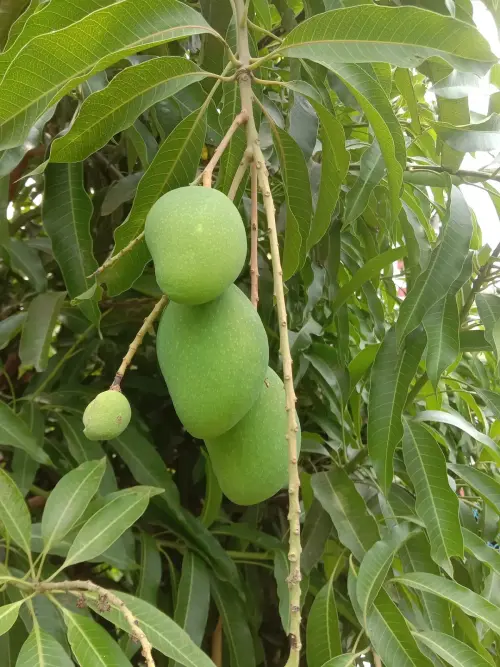
Mango
Mangifera indica
India produces nearly half the world’s mango harvest and grows more than a thousand varieties – from Alphonso to Dasheri.
-
 4
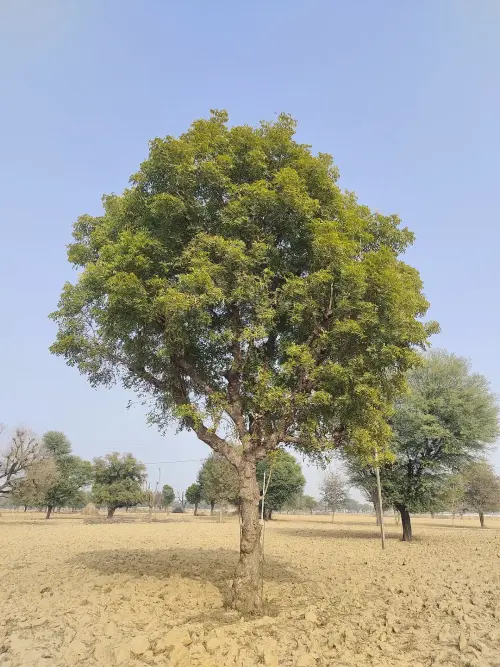
Neem
Azadirachta indica
Neem is India’s village pharmacy: its twigs clean teeth, its oil protects crops and its leaves heal the skin.
-
 5
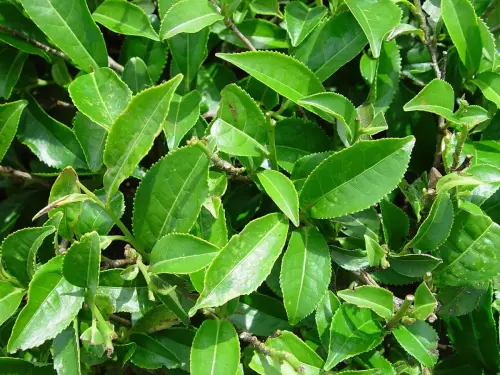
Tea plant
Camellia sinensis
Assam, Darjeeling, Nilgiri – India’s teas are brands known all over the world, and chai is drunk on every street corner.
-
 6
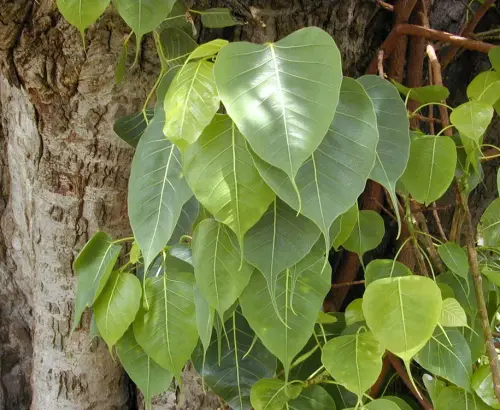
Sacred fig
Ficus religiosa
It was under a sacred fig in Bodh Gaya that Siddhartha Gautama attained enlightenment – to Buddhists and Hindus it is a holy tree.
-
 7
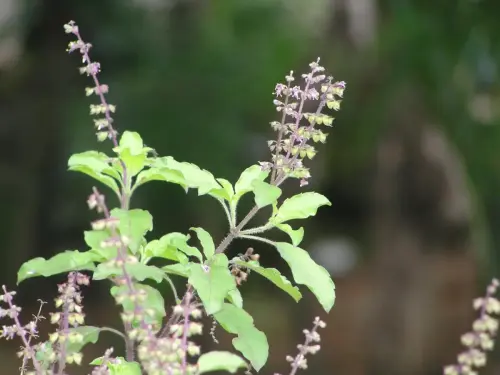
Holy basil
Ocimum tenuiflorum
Tulsi grows in front of almost every Hindu home – it is watered daily and honoured with prayer as the embodiment of a goddess.
-
 8
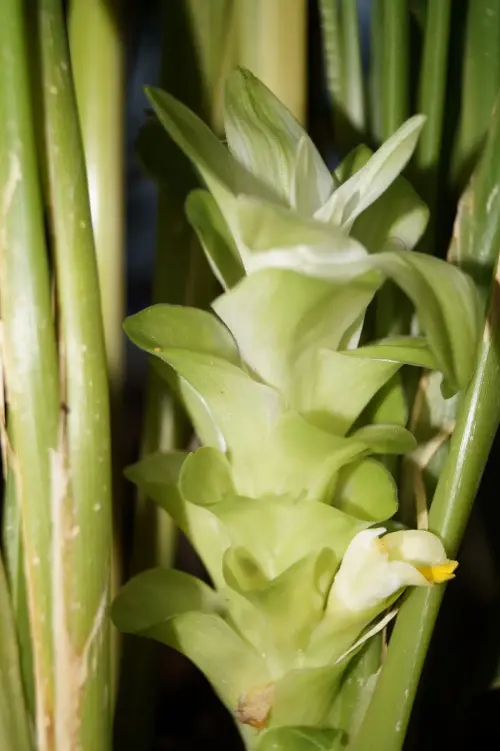
Turmeric
Curcuma longa
India supplies about three-quarters of the world’s turmeric – there is no curry without it, and before a wedding it is smeared on the bride and groom.
-
 9
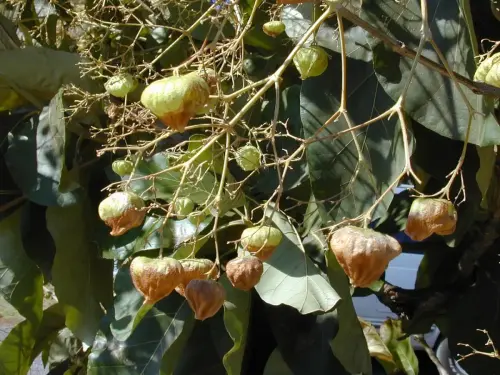
Teak
Tectona grandis
Malabar teak was used to build Royal Navy warships, and Nilambur in Kerala has the oldest teak plantation in the world.
-
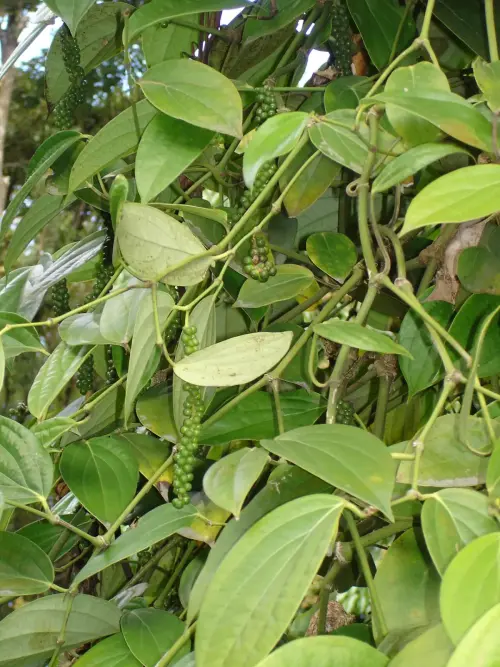 10
Black pepper
Piper nigrum
The “black gold” of Malabar – pepper from Kerala drew Roman and Arab merchants to India, and eventually Vasco da Gama.
-
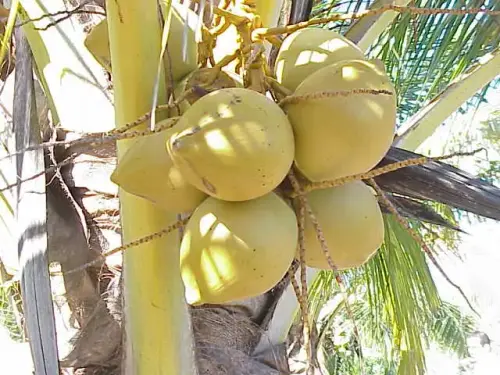 11
Coconut palm
Cocos nucifera
The palm that, according to popular etymology, gave Kerala its name – its nut is broken for good luck during Hindu rituals.
-
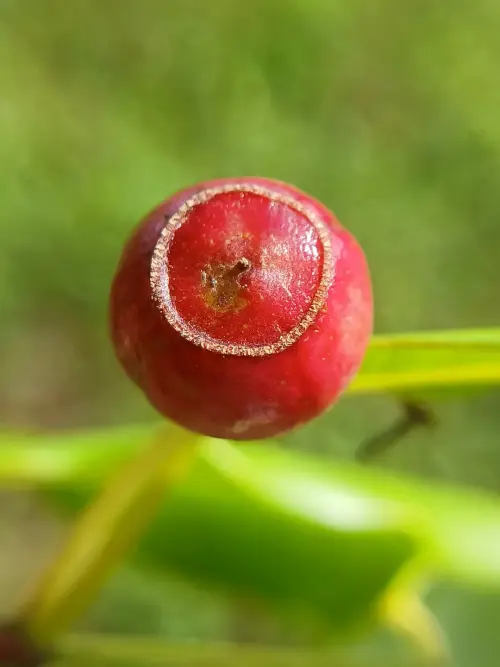 12
Indian sandalwood
Santalum album
A tree whose fragrant wood has gone into temples, incense and perfumes for thousands of years – the famous “Mysore sandalwood”.
-
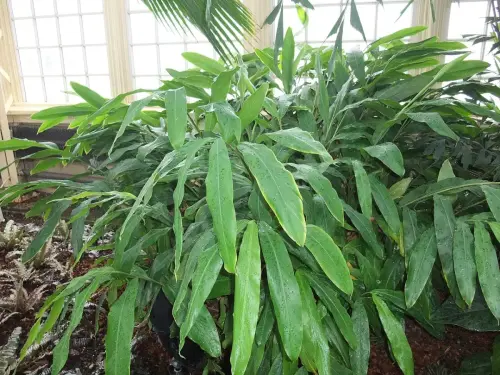 13
Green cardamom
Elettaria cardamomum
The “queen of spices” from the humid forests of the Western Ghats – its aromatic green pods go into masala chai, sweets and biryani.
-
 14
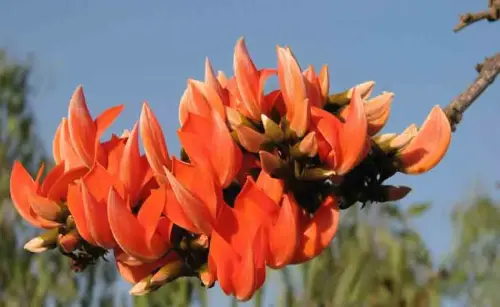
Flame of the forest
Butea monosperma
“Flame of the forest” – at the turn of winter and spring the leafless tree is covered in orange-red flowers, once used to make dye for Holi.
-
 15
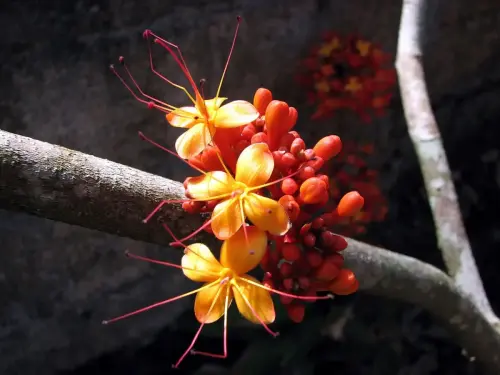
Ashoka tree
Saraca asoca
The sacred “sorrowless” tree – in the Ramayana Sita was held captive in an ashoka grove, and some traditions say the Buddha was born beneath one.
India on other Ominuvo maps
- World in NumbersPopulation: 1.46 billion (2025)Source: World Bank – WDI: UN World Population Prospects (CC BY 4.0)
- Languages of the worldHindi, English · official languagesSource: Unicode CLDR (Unicode License v3)
- Prices around the worldIndian rupee (INR)Source: ISO 4217
- Time zones mapUTC+5:30Source: IANA tz database (public domain)
- Plugs and sockets of the worldType C, D, M · 230 V · 50 Hz
- National dishes of the world11 national dishes
- Castles map117 castles and palacesSource: Wikidata (CC0 1.0)
- Volcano & earthquake map1 volcanoSource: Smithsonian GVP (Smithsonian Terms of Use)
- Ghost map4 ghost stories and haunted places
- UFO sightings map4 UFO sightings and unexplained cases
- VPN provider mapServers of 28 VPN providersSource: VPN Map (Ominuvo) (CC BY 4.0)