China · #4 crop
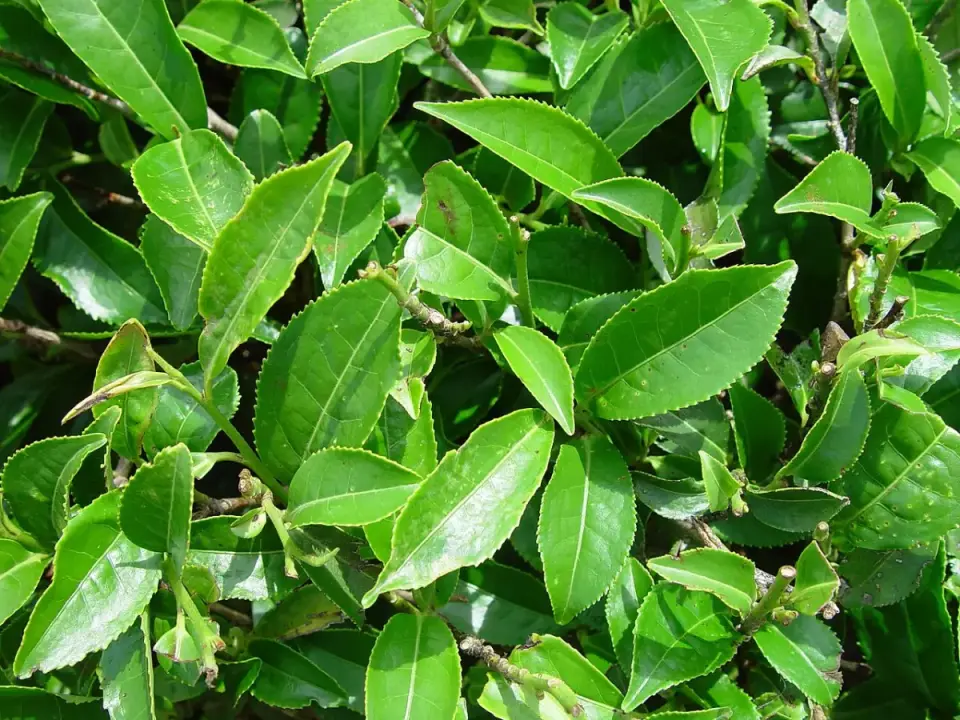
Tea plant
Camellia sinensis · locally: chá (茶)
Tea was born in China – Yunnan is still home to tea trees that are hundreds of years old.
An evergreen shrub or tree with leathery, toothed leaves and fragrant white flowers with a tuft of yellow stamens. In the wild it can reach over ten metres, but on plantations it is pruned to a height of about 1 m. It originates in the mountains of the borderlands of south-western China, where wild and semi-wild tea trees hundreds of years old have survived in the forests of Yunnan. From the same leaves, depending on how they are processed, the Chinese make green, white, yellow, oolong, black (known in China as red) and fermented pu-erh tea.
Significance in the country
China is the homeland of tea and its largest producer; legend credits Emperor Shennong with discovering the brew, and regional teas such as Longjing from Hangzhou, Tieguanyin from Fujian and pu-erh from Yunnan are part of the national heritage.
Where it grows
The mountainous provinces of southern and central China – from Yunnan and Sichuan to Fujian and Zhejiang; the northernmost plantations reach Henan (Xinyang), Shaanxi and Shandong.
More: Wikipedia (en) Wikipedia (pl)