Kenya · #2 crop
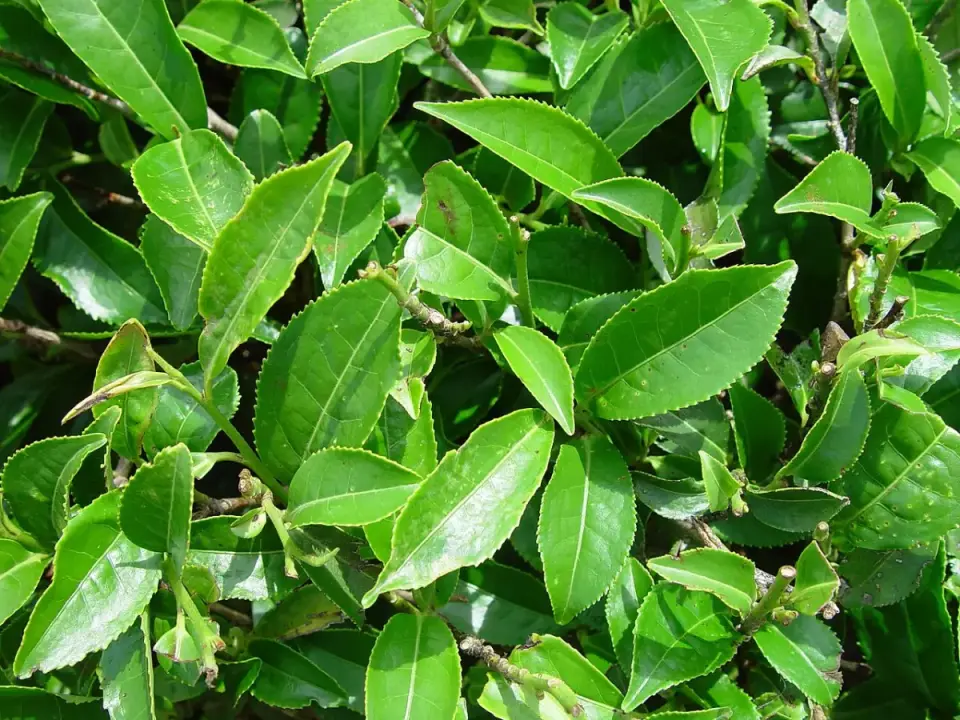
Tea plant
Camellia sinensis · locally: chai (suahili)
Kenya is the world’s largest exporter of black tea – the green carpets of Kericho’s plantations stretch to the horizon.
An evergreen shrub of the tea family, native to East Asia, which can reach several metres in the wild but on plantations is pruned to about 1 m, forming level “tables”. The two youngest leaves and the bud are picked, and after withering, cutting, fermentation and drying they become black tea. It grows best on acid soils in the cool, rainy climate of tropical mountains.
Significance in the country
Tea was brought to Kenya in 1903, and today it employs hundreds of thousands of smallholders and is one of the country’s main sources of foreign currency; Kenyan CTC tea goes into blends all over the world, while at home it is drunk as sweet chai with milk.
Where it grows
Rainy highlands at 1,500–2,700 m: Kericho, Bomet and Nandi west of the Rift, around Kisii and Nyamira, the slopes of the Aberdares and Mount Kenya (Kiambu, Murang’a, Nyeri, Kirinyaga, Meru, Embu) and Kakamega.
More: Wikipedia (en) Wikipedia (pl)