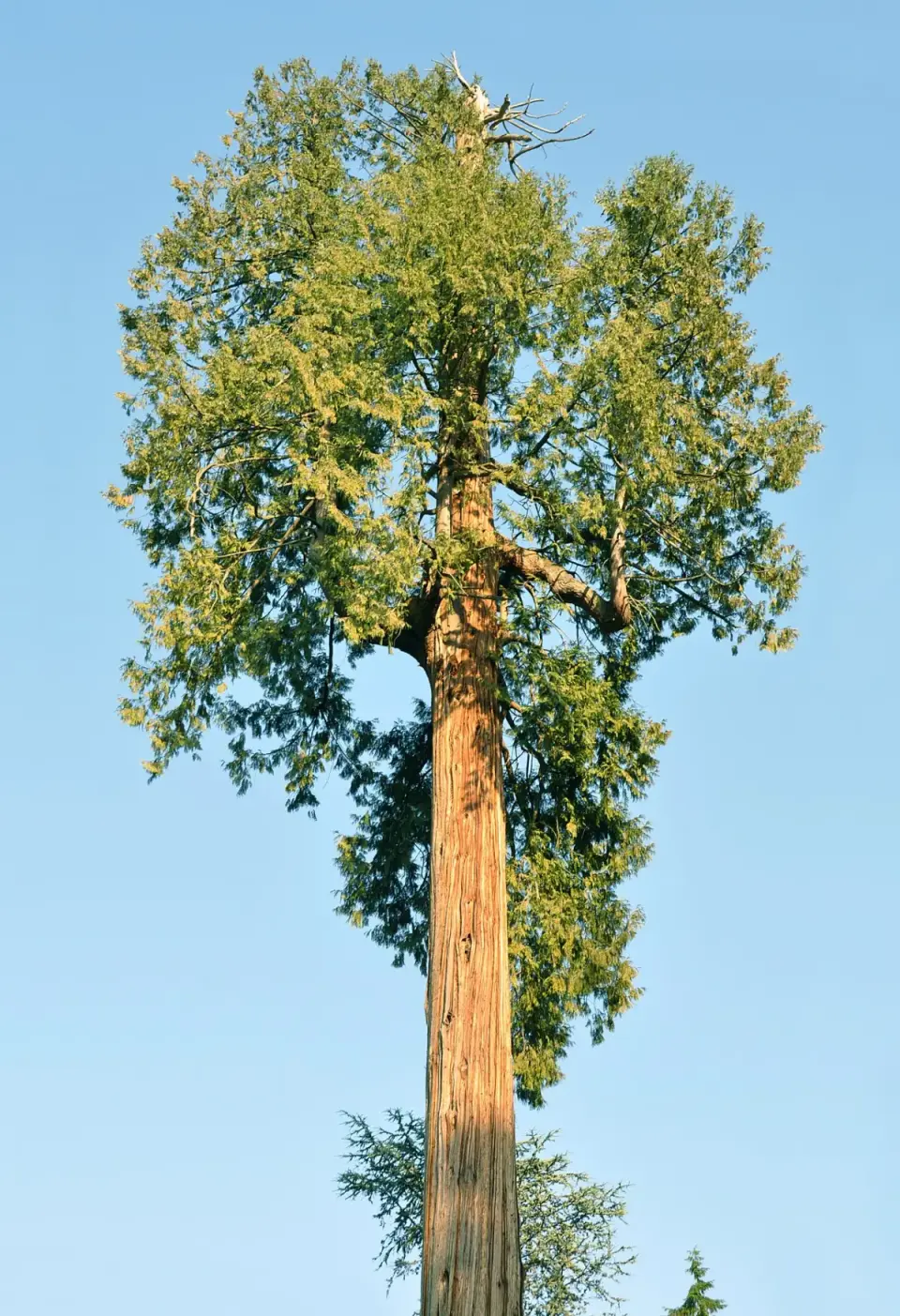
Canada · #3 tree Provincial tree of British Columbia
Western red cedar
Thuja plicata · locally: western red cedar
The “tree of life” of the West Coast’s Indigenous peoples – its trunks were carved into famous totem poles and ocean-going canoes.
A massive conifer growing to 60–70 m tall, with a trunk several metres across, scale-like aromatic leaves and fibrous, reddish-brown bark. It grows in the temperate rainforests of the Pacific coast and in the valleys of the Columbia Mountains. The oldest specimens are more than a thousand years old. Its light, fragrant wood is exceptionally resistant to rot, so it is used for shingles, cladding and parts exposed to damp.
Significance in the country
For peoples such as the Haida, Kwakwaka’wakw and Nuu-chah-nulth it provided material for houses, canoes and totem poles, and its bark was woven into clothing and baskets. Today the great red cedars are icons of British Columbia’s old-growth forests, including those on Vancouver Island.
Where it grows
British Columbia: the Pacific coast, Vancouver Island and Haida Gwaii, and moist valleys in the interior of the province.
More: Wikipedia (en) Wikipedia (pl)